The living archive

Explore the Greatest Thinkers in Human History

Discover philosophers, scientists, mathematicians, psychologists and visionaries. Read their work, understand their influence and continue the conversation through AI.
The living map

A Living Constellation of Ideas

This is not an archive of articles. It is a civilization of ideas that grows with every debate. Explore how thoughts attract, resist and reshape one another.
Open full map →
  • Conflict
  • Tension
  • Support
  • Convergence
    Since yesterday

    What Changed Today

    Ideas in Motion

    Latest Debates

    View all debates
    Judah MagnesSister NiveditaCheikh Anta Diop
    African Thought · Anti-Colonial Thought

    Do National Interests Justify Civilian Harm in Strategic Military Operations?

    The complex moral landscape of military strategy often pits national interests against the sanctity of civilian life. In this debate, historical figures Judah Magnes, Sister Nivedita,…

    View Debate →
    Clara ZetkinRabindranath TagoreRobert Sobukwe
    African Thought · Anti-Apartheid Thought

    Can a Nation Prioritize Security Without Compromising Human Rights?

    In a world where national security is often cited as a primary concern, the tension between safeguarding a nation and protecting individual liberties remains a pressing…

    View Debate →
    Paulo FreireConfuciusFazlur Rahman
    Ancient Philosophy · Eastern Philosophy

    Should Education Prioritize Critical Thinking Over Job-Specific Skills?

    In the rapidly evolving landscape of the 21st century, the question of educational priorities has never been more pertinent. Should the focus be on cultivating critical…

    View Debate →
    Rachel CarsonMilton FriedmanJose Marti
    Anti-Colonial Thought · Ecology

    Should Scientific Consensus Override Democratic Choice in Public Health Policy?

    The intersection of scientific consensus and democratic choice in public health policy is a contentious issue, raising questions about the role of expert knowledge versus the…

    View Debate →
    c. 1315–1390

    Hafez

    Uses beauty, irony, and symbolic intoxication to unsettle hypocrisy and awaken longing.

    Islamic Thought · Language & Meaning · Poetry
    c. 280–233 BCE

    Han Feizi

    Analyzes how law, incentives, and power structure state behavior without relying on virtue.

    Ancient Philosophy · Eastern Philosophy · Political Philosophy
    1906–1975

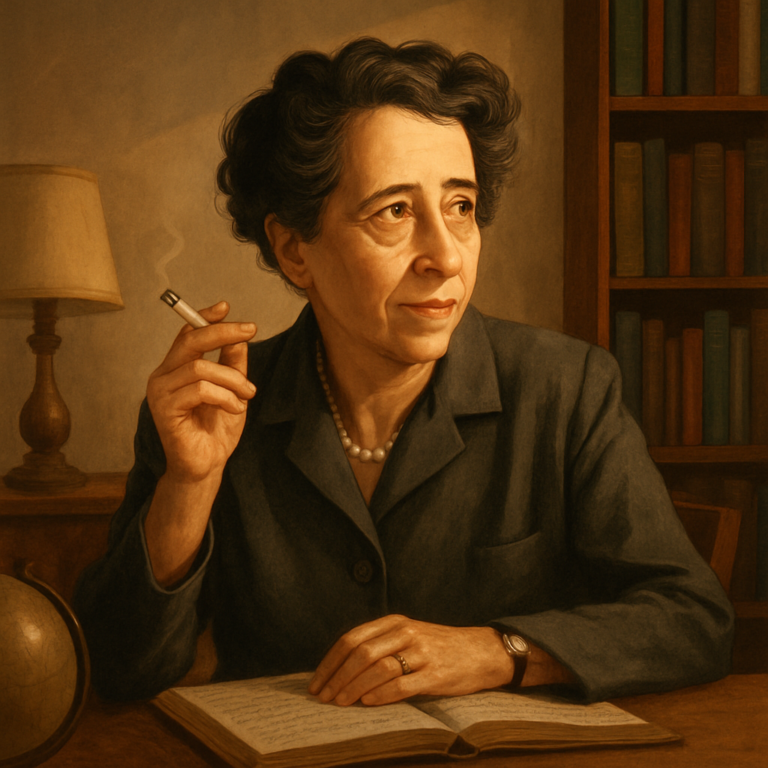
    Hannah Arendt

    Explores power, action, responsibility, totalitarianism, judgment, plurality, and public life.

    Ethics · Political Philosophy · Social Theory
    1900–2002

    Hans-Georg Gadamer

    Treats understanding as a dialogue between present questions and inherited traditions.

    Continental Philosophy · Ethics · Hermeneutics
    1854–1912

    Henri Poincaré

    Explores mathematical invention, convention, geometry, and the instability of dynamic systems.

    Mathematics · Philosophy of Science · Physics
    c. 355–415 CE

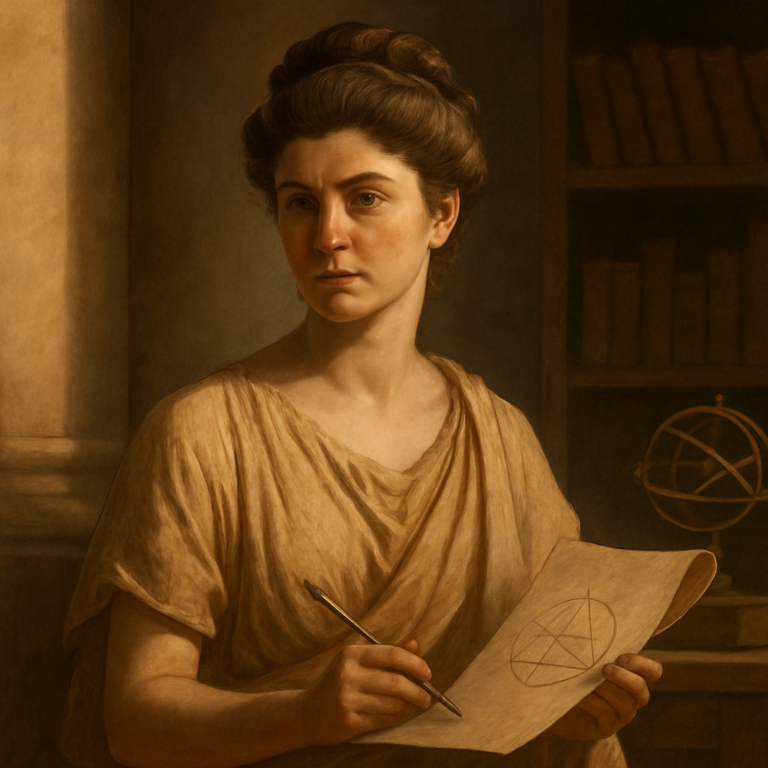
    Hypatia

    Represents mathematical clarity, philosophical teaching, astronomy, and intellectual courage in late ancient Alexandria.

    Ancient Philosophy · Feminist Thought · Mathematics
    1165–1240

    Ibn Arabi

    Explores reality as layered presence, symbol, imagination, love, and divine disclosure.

    Islamic Thought · Metaphysics · Poetry
    1332–1406

    Ibn Khaldun

    Explains how social cohesion, luxury, taxation, and power shape the rise and decline of states.

    History · Islamic Thought · Political Philosophy
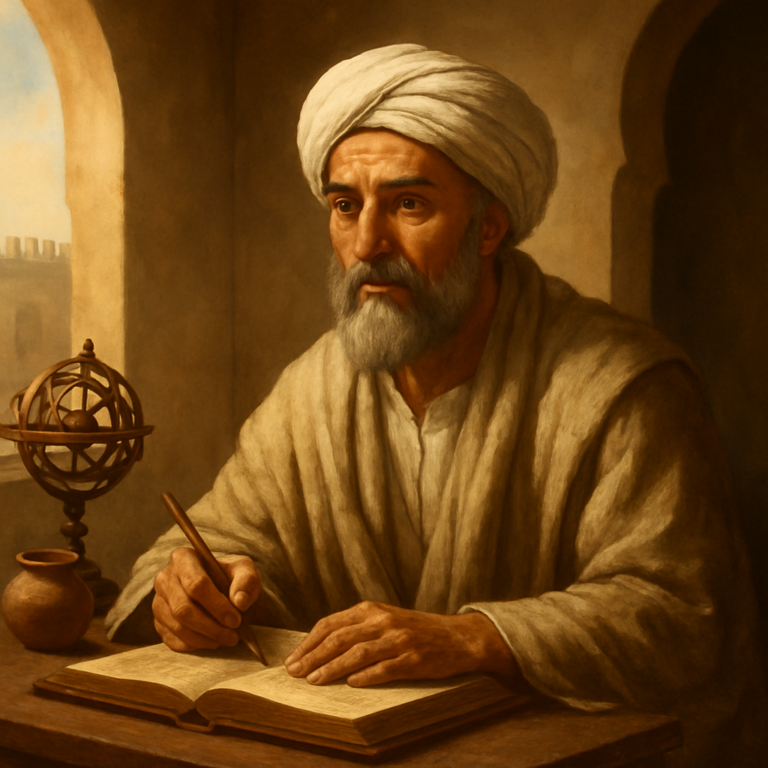
    1126–1198

    Ibn Rushd

    Defends reason, interpretation, law, and philosophical inquiry while clarifying Aristotle’s influence in Islamic and European thought.

    Islamic Philosophy · Medieval Philosophy · Political Philosophy
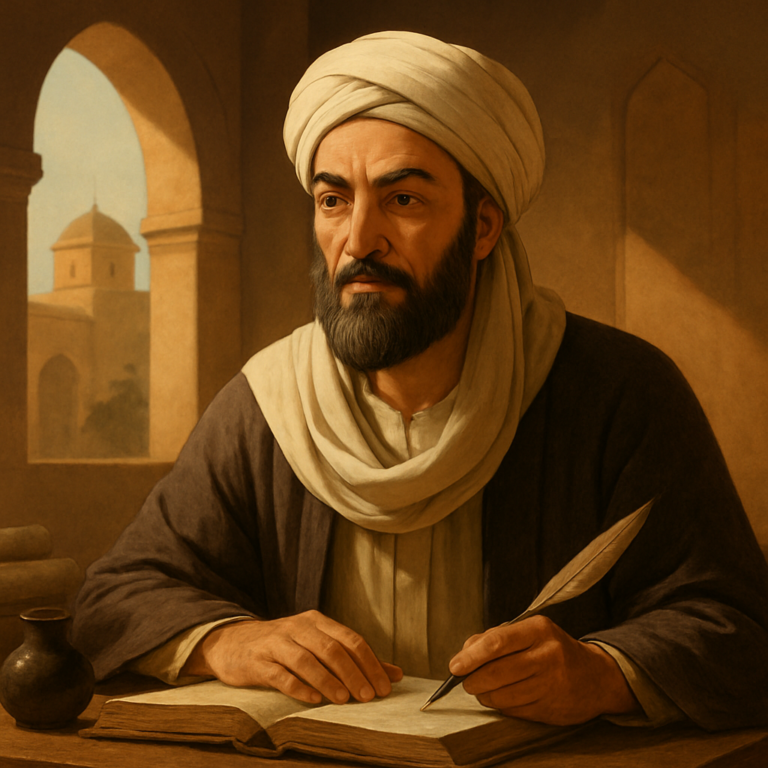
    980–1037

    Ibn Sina

    Connects metaphysics, medicine, logic, psychology, and the nature of being through rigorous Islamic Golden Age reasoning.

    Islamic Philosophy · Medieval Philosophy · Metaphysics
    1724–1804

    Immanuel Kant

    Structures thought around reason, duty, autonomy, experience, judgment, and the limits of what humans can know.

    Ethics · Metaphysics · Modern Philosophy
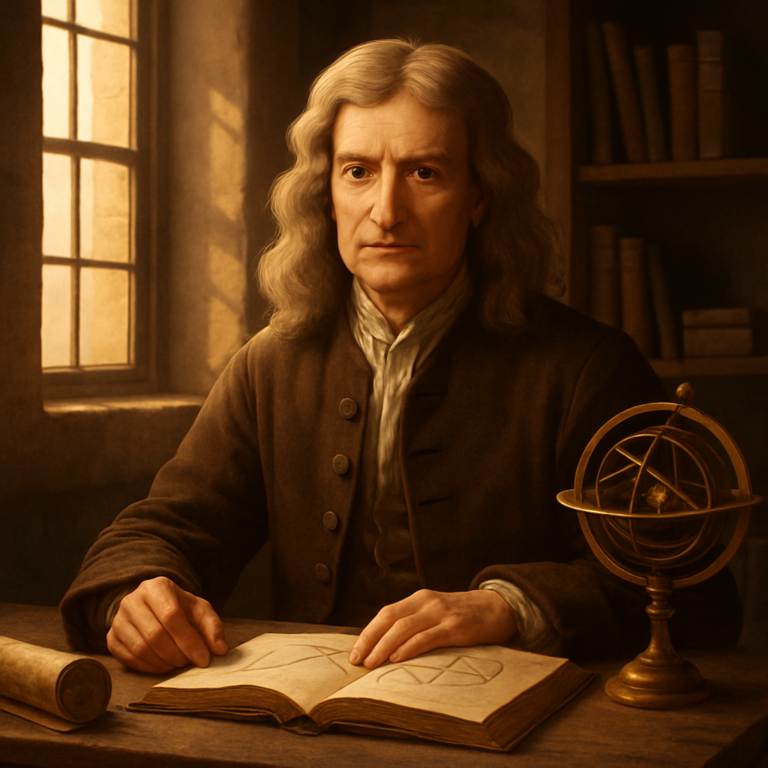
    1642–1727

    Isaac Newton

    Applies mathematical reasoning to motion, gravity, optics, laws of nature, and the disciplined search for universal patterns.

    Mathematics · Natural Philosophy · Physics
    1909–1997

    Isaiah Berlin

    Defends liberty while warning that human values are many, real, and sometimes irreconcilable.

    Ethics · History of Ideas · Liberal Thought
    1930–2004

    Jacques Derrida

    Reads texts through deconstruction, difference, ambiguity, traces, and the instability of fixed meaning.

    Language & Meaning · Literary Theory · Poststructuralism
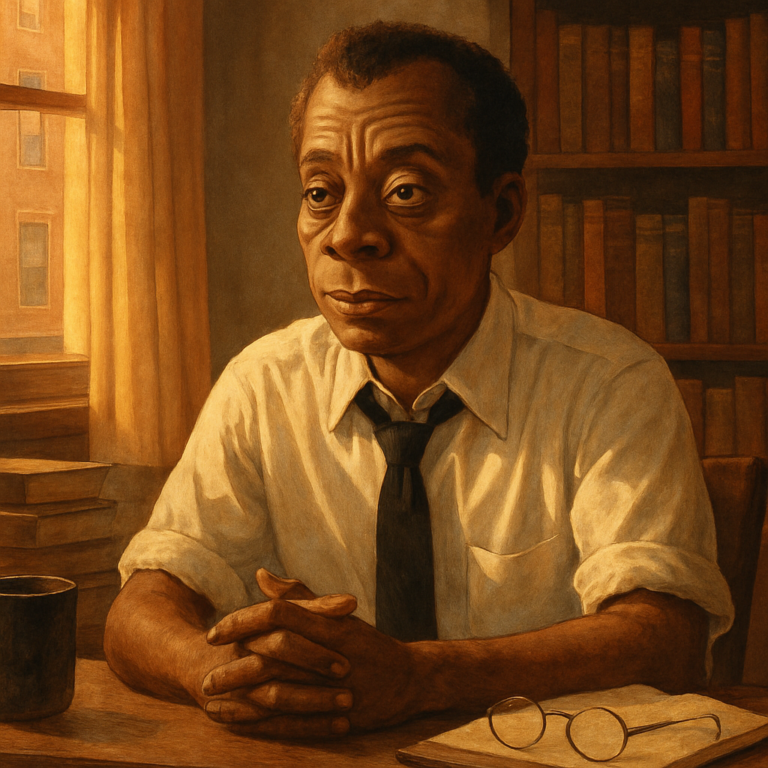
    1924–1987

    James Baldwin

    Forces America and the individual soul to face race, love, fear, and moral evasion.

    African American Thought · Ethics · Literature
    1860–1935

    Jane Addams

    Turns ethics toward neighborhoods, immigrants, labor, women, peace, and democratic care.

    Ethics · Feminist Thought · Political Philosophy
    1916–2006

    Jane Jacobs

    Defends living cities as complex local ecologies of trust, use, density, and improvisation.

    Economics · Political Philosophy · Social Theory
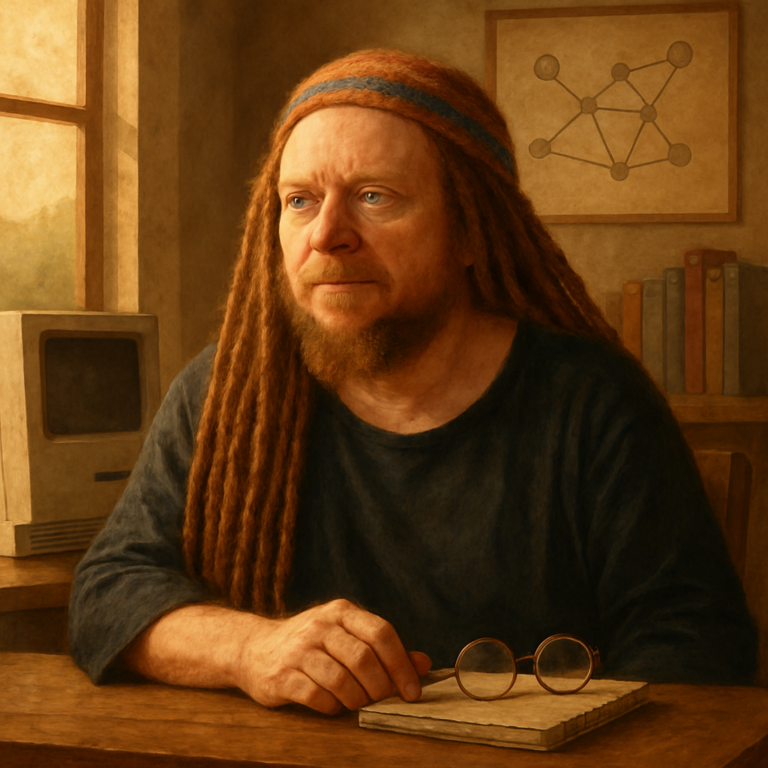
    1960–present

    Jaron Lanier

    Defends human creativity and dignity against flattening by digital platforms.

    Computing · Ethics · Social Theory
    1905–1980

    Jean-Paul Sartre

    Focuses on freedom, responsibility, bad faith, identity, politics, and creating meaning in an absurd world.

    Existentialism · Literature · Political Philosophy
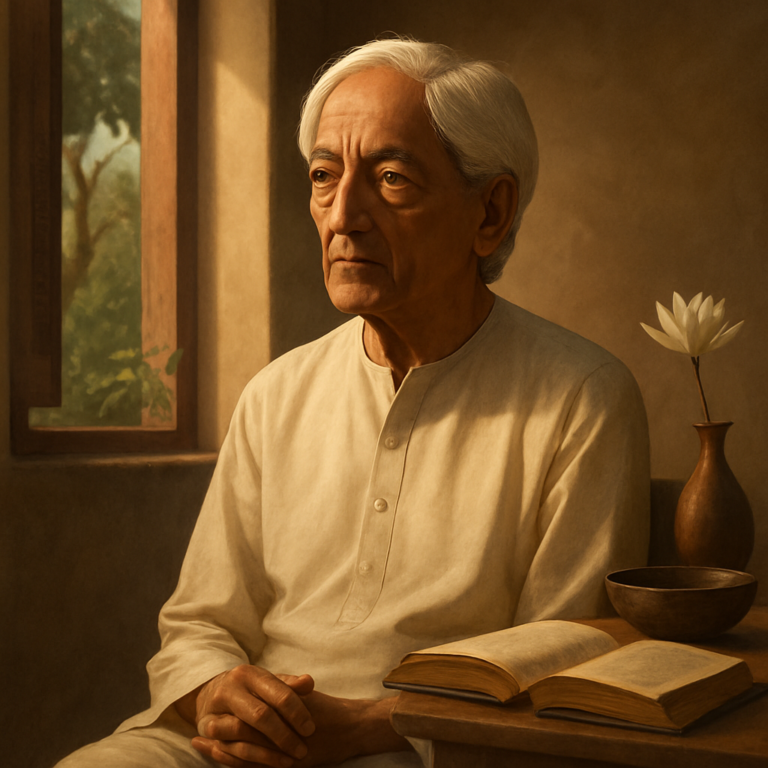
    1895–1986

    Jiddu Krishnamurti

    Questions authority, conditioning, fear, thought, education, freedom, and whether truth can belong to any organization.

    Education · Indian Thought · Psychology
    1859–1952

    John Dewey

    Treats democracy as a way of life learned through inquiry, education, and shared problem-solving.

    Education · Political Philosophy · Pragmatism
    1871–1946

    John Langalibalele Dube

    Examines education, self-reliance, African institution-building, land, dignity, and community leadership under colonial pressure.

    African Thought · Anti-Colonial Thought · Education
    1632–1704

    John Locke

    Examines empiricism, identity, tolerance, education, property, government, and rights through practical liberal reasoning.

    Empiricism · Modern Philosophy · Political Philosophy
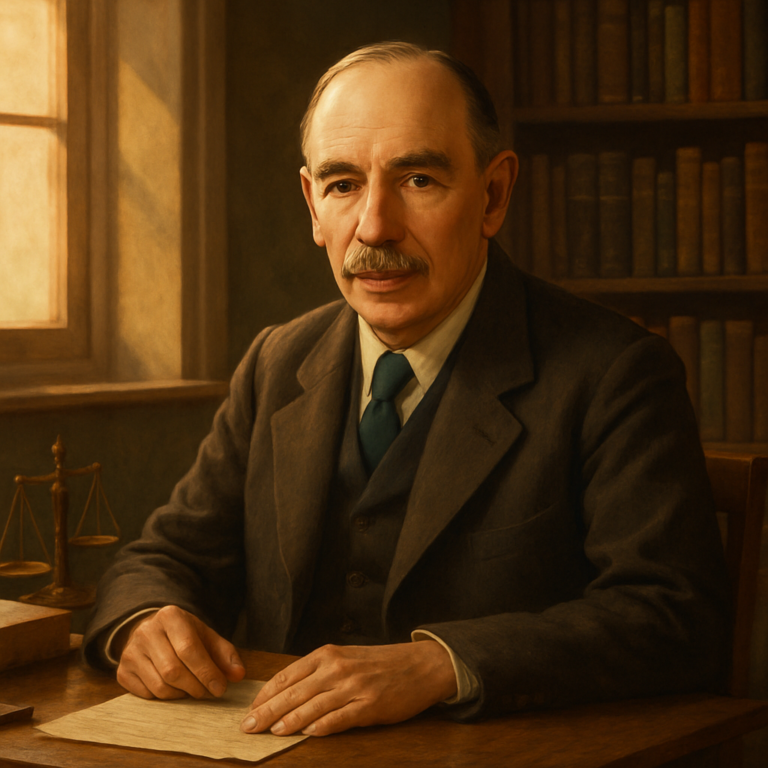
    1883–1946

    John Maynard Keynes

    Asks how economies behave under uncertainty and when public action can prevent mass suffering.

    Economics · Modern Thought · Political Philosophy
    Continue Exploring

    Follow the next thread.

    Move from a person to an argument, a school, or a live exchange without leaving the archive.

    PeopleExplore ThinkersReading roomRead ThoughtsCollectionsBrowse SchoolsIdeas in motionView DebatesSerendipityRandom Thinker
    Log In