
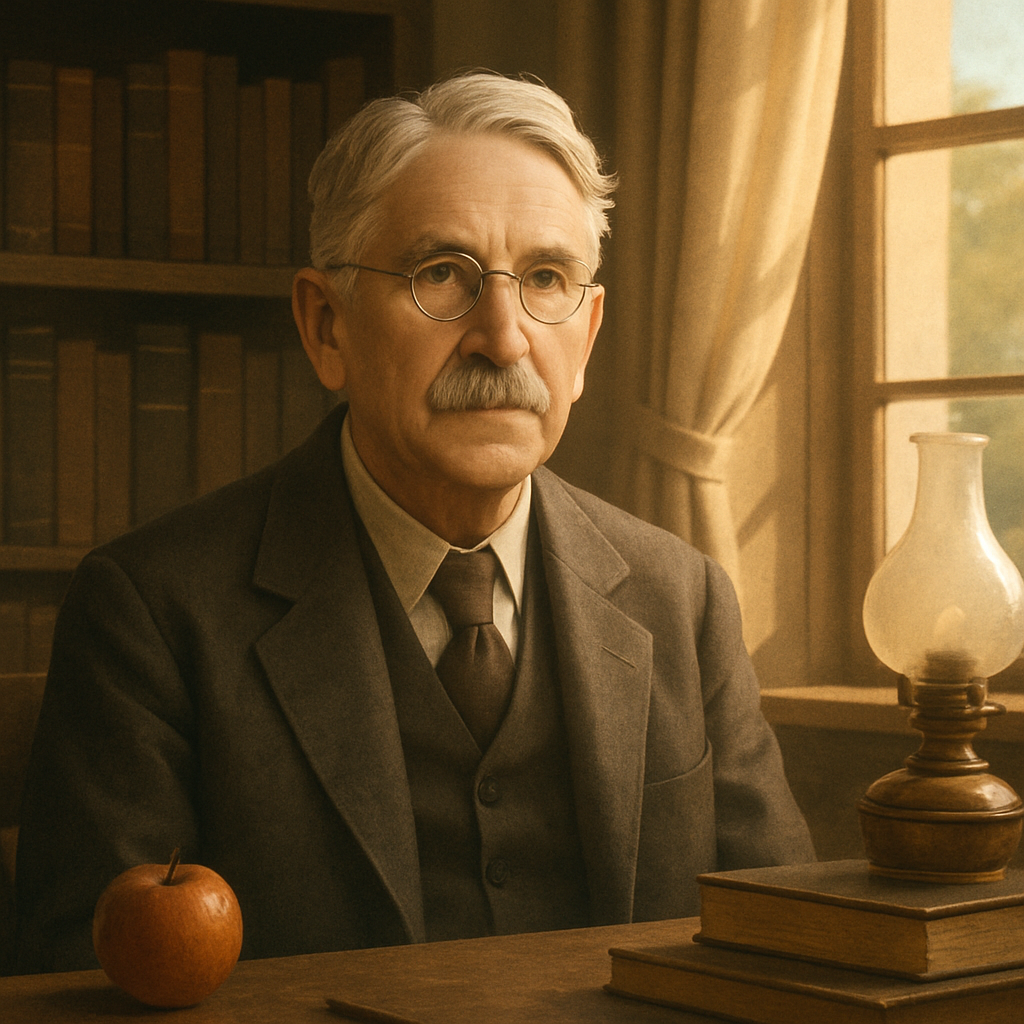
Meet
John Dewey
1859–1952 · Contemporary · American
Philosophy
Pragmatist of democracy, education, inquiry, and experience.
This voice is an AI interpretation built from their published work. It is not the historical person, and it can be wrong.
- A Thinker is a person
- A Thought is an essay in their voice
- An Idea is a concept
- A Debate tests ideas
Who they were
The life behind John Dewey’s ideas
John Dewey is presented in the Thought archive through philosophy, american, american, contemporary. The recorded life dates are 1859–1952. The profile connects this work to Education, Political Philosophy, Pragmatism, Psychology.
The central questions gathered here concern democracy, education, experience, inquiry, public problem-solving. Together they show the recurring problems, methods, and distinctions that define this thinker’s contribution.
John Dewey developed within an intellectual conversation shaped by William James, Peirce, Hegel. These names provide context for the traditions and problems surrounding the work; they do not imply simple agreement.
Read the full biography
Treats democracy as a way of life learned through inquiry, education, and shared problem-solving.
- Era
- Contemporary
- Tradition
- American
- Discipline
- Philosophy
- Life dates
- 1859–1952
- Country
- American
- Schools
- Education, Political Philosophy, Pragmatism, Psychology
The questions they explored
What kept them wondering
- 01
Democracy
- 02
Education
- 03
Experience
- 04
Inquiry
- 05
Public problem-solving
Orbit of influence
Everything John Dewey is connected to
Each line is a recorded connection: an idea they hold in the debate record, a Thought written in their voice, an influence, or a debate they joined.
- holds an idea
- recorded influence
- took part in a debate
The same connections as a list
Ideas
- Philosophical inquiry as guardian of wisdomholds this idea · 1 debate
- Democracyholds this idea
- Educationholds this idea
- Experienceholds this idea
- Inquiryholds this idea
- Public problem-solvingholds this idea
Thinkers
- William Jamesrecorded influence
Debates
- The Role of Philosophical Inquiry in Preventing Societal Errorstook part in this debate
Ideas John Dewey holds in the debate record
Influences and connections
Who shaped them, and whom they shaped
Shaped by
- William James
- Peirce
- Hegel
Went on to shape
- progressive education
- pragmatism
- democratic theory
Kindred minds
 Pierre BourdieuShares Education, Political Philosophy
 Jan Christiaan SmutsShares Political Philosophy, Philosophy
 Mary Parker FollettShares Political Philosophy, American
 Lewis MumfordShares Political Philosophy, American
 Richard FeynmanShares Education, American
 Frederick DouglassShares Political Philosophy
Ideas in motion
Debates featuring John Dewey
Test an assumption, explore an idea, or bring John Dewey into dialogue with a council of other thinkers.
Keep exploring
Where John Dewey leads next
Or pick another star
Thought is for exploring, questioning and connecting ideas. It doesn’t tell you what to think.