
Balance Test
Add your age and sex
Some assessments compare your result with people of the same age and sex, so they can only give a rating once they know both. Sneaky will not guess. What you enter here stays on this device.
Move the slider towards the end that applies to you. The middle means “not stated”, and an assessment that compares by sex will then not give a rating.
Log in to keep your details and results with your account.
Single-leg balance on both sides.
A timer, clear floor space, and stable support nearby.
Time each side in seconds; stop safely if you lose position.
What the Balance Test Measures and Why It Matters
The Balance Test measures your stability, coordination, and body control — key components of functional movement and injury prevention.
Balance is not just about standing still. It reflects how well your body can control movement, maintain posture, and respond to changes in position.
At Sneaky Helpers, we go beyond simple balance tests.
We assess your performance across different conditions — including left and right sides and visual input (eyes open or closed) — to provide a more complete picture of your stability and control.
Strong balance supports:
- Safer movement in daily life
- Improved athletic performance
- Reduced risk of falls and injuries
- Better coordination and body awareness
How the Test Works and Its Accuracy
This test evaluates your ability to balance on one leg under controlled conditions.
You will:
- Stand on your left leg and record your time
- Stand on your right leg and record your time
- Perform the test with eyes open or closed
Your results are combined into a composite score, which reflects your overall balance ability.
Traditional balance tests focus on a single measurement. Our approach evaluates multiple variables, including side-to-side performance and visual dependency, providing a more realistic and functional assessment of your stability.
How to Interpret Your Results
Longer balance times generally indicate better stability — but that’s only part of the story.
Your result is based on:
- Overall balance time
- Side-to-side consistency
- Stability under different conditions
Two people can achieve the same time but have very different balance control depending on how evenly they perform on each side.
That’s why your result is translated into a personalized balance score, giving you a clearer understanding of your true stability.
You may also receive insights such as:
- One side being significantly stronger
- Balanced but limited stability
- Strong performance with good control
These insights are often more valuable than time alone.
Practical Guidance for Users
To improve your balance:
- Practice single-leg balance regularly
- Train both sides equally to reduce imbalances
- Incorporate exercises such as:
- Single-leg stands
- Heel-to-toe walking
- Balance board exercises
- Yoga or controlled movement training
- Progress gradually (e.g., eyes closed, unstable surfaces)
- Stay consistent — balance improves with repetition and control
Understand it, then choose one next step
Sneaky’s health-math system calculates the result. AI can explain it, but cannot change the score or classification.
Log in to save your data
Track assessment results, compare progress, and keep your health profile connected across tools.
Add your age and sex
Some assessments compare your result with people of the same age and sex, so they can only give a rating once they know both. Sneaky will not guess. What you enter here stays on this device.
Move the slider towards the end that applies to you. The middle means “not stated”, and an assessment that compares by sex will then not give a rating.
Log in to keep your details and results with your account.
Movements that may pair well with this test result and help guide your next training step.
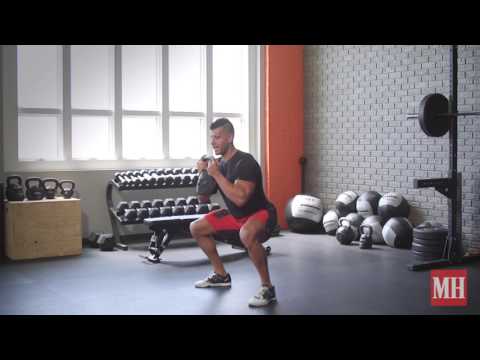 Mechanical chain squat
: Exercise Guide Overview The mechanical chain squat is a strength-focused exercise primarily targeting the quadriceps,…
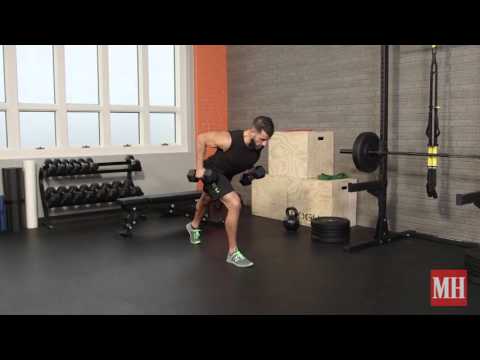 Single-leg romanian deadlift
: Exercise Guide Overview The single-leg Romanian deadlift is a strength-focused exercise that emphasizes control and…
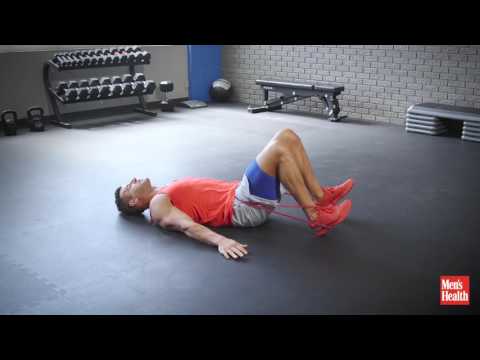 Band glute bridge
: Exercise Guide Overview The band glute bridge is a strength-focused exercise that emphasizes slow, controlled…
 Rolling squat
: Exercise Guide Overview The rolling squat is a slow, controlled movement designed to enhance strength primarily…
Food ideas selected to support the bigger health picture around this assessment.
Short reads that add useful context without sending you on a research expedition.
 Is Your Gut Trying to Tell You Something Important?
Gastrointestinal health is often overlooked, yet it plays a crucial role in our overall well-being. Many people experience…
 Can Simple Habits Transform Your Health After 50?
As we age, our bodies undergo various changes, and maintaining our health becomes more crucial than ever. However,…
 Could Your Hormones Be Sabotaging Your Health?
Hormones play a crucial role in men’s health, influencing everything from mood to metabolism. When hormonal imbalances occur,…
 Can Traditional Chinese Medicine Transform Your Health Journey?
In a world where the quest for optimal health is ever-evolving, many people are turning to Traditional Chinese…
Balance
Good to know
Eyes open or eyes closed?
Start with eyes open; eyes closed is much harder. Use the same choice for both legs and next time, so your report can compare your results directly.
When does the time stop?
When your raised foot touches down or you hold on to something.
Why test both legs?
Most people balance better on one leg. Comparing the two shows which side to work on.
How do I make a retest fair?
Use the same surface, the same footwear or bare feet, and the same eyes choice. Being tired changes your balance too.
How do I stay safe?
Stand beside a wall or a sturdy chair. Don't try eyes closed if you feel unsteady, and stop if you feel dizzy.
Is this medical advice?
No. A check measures one thing at one moment and gives general information, not a diagnosis. If a result worries you, or you have symptoms, an injury or a health condition, talk to a doctor or another qualified professional.