

Plank Test
What the Plank Test Measures and Why It Matters
The Plank Test measures your core strength, endurance, and stability across multiple planes of movement.
Unlike basic core tests, this assessment evaluates not only how long you can hold a position, but how well your core performs across front and side stability, giving a more complete picture of your functional strength.
Your core is responsible for:
- Supporting posture
- Stabilizing movement
- Transferring force between upper and lower body
- Protecting your spine during activity
At Sneaky Helpers, we go beyond a single hold time.
We analyze your performance across multiple positions to identify strength, endurance, and potential imbalances, turning a simple test into a more intelligent core assessment.
How the Test Works and Its Accuracy
This test includes three components:
- Front Plank – overall core endurance and stability
- Left Side Plank – lateral strength and control
- Right Side Plank – lateral strength and balance
You’ll hold each position for as long as possible while maintaining proper form.
Your results are then combined into a composite score, which reflects your overall core performance.
Traditional plank tests rely on a single time measurement. Our approach considers multiple positions and balance between sides, providing a more realistic and functional assessment of your core strength.
How to Interpret Your Results
Longer hold times generally indicate stronger core endurance — but that’s only part of the picture.
Your result is based on:
- Total endurance
- Side-to-side balance
- Relative performance across positions
Two people can hold the same front plank but have very different overall core strength depending on their side stability and balance.
That’s why your result is translated into a personalized core score, giving you a clearer understanding of your true core capability.
You may also receive insights such as:
- One side being stronger than the other
- Balanced but limited endurance
- Strong endurance with good stability
These insights are often more valuable than time alone.
Practical Guidance for Users
To improve your plank performance:
- Focus on maintaining a straight line from head to heels
- Engage your core rather than relying on your shoulders
- Train both front and side planks regularly
- Address imbalances by strengthening your weaker side
- Include exercises such as:
- Dead bugs
- Bird dogs
- Side planks with progression
- Anti-rotation movements
Consistency and control are more important than duration alone.
Log in to save your data
Track assessment results, compare progress, and keep your health profile connected across tools.
Movements that may pair well with this test result and help guide your next training step.
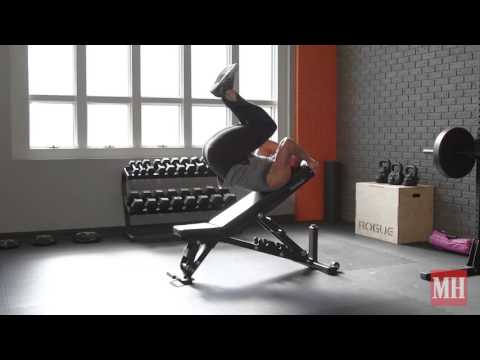 Incline reverse crunches
: Exercise Guide Overview Incline reverse crunches are a controlled movement primarily targeting the abdominal muscles.…
Incline reverse crunches
Incline reverse crunches: Exercise Guide Overview Incline reverse crunches are a controlled movement primarily targeting the abdominal muscles.…
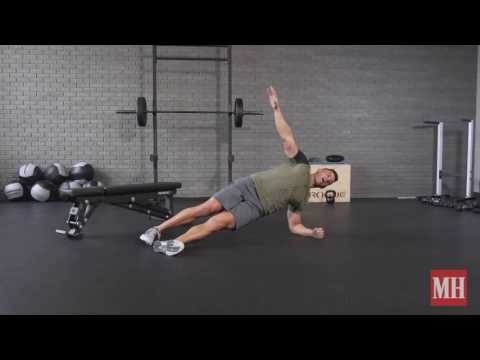 Side plank complex
: Exercise Guide Overview The side plank complex is a slow, controlled movement that emphasizes core…
Side plank complex
Side plank complex: Exercise Guide Overview The side plank complex is a slow, controlled movement that emphasizes core…
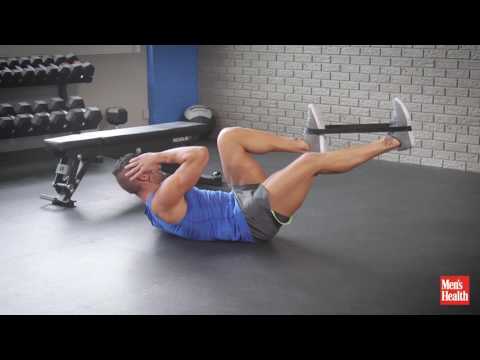 Bicycle crunch with band
: Exercise Guide Overview The bicycle crunch with band is a slow, controlled exercise primarily…
Bicycle crunch with band
Bicycle crunch with band: Exercise Guide Overview The bicycle crunch with band is a slow, controlled exercise primarily…
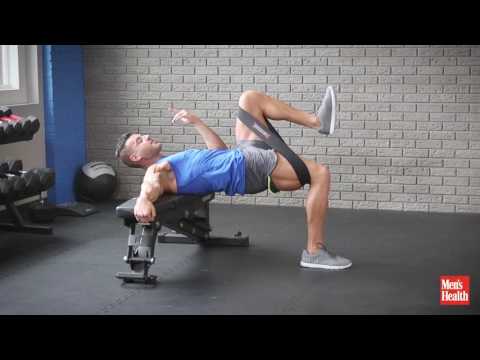 Single-leg band hip thrust
: Exercise Guide Overview The single-leg band hip thrust is a slow, controlled movement that…
Single-leg band hip thrust
Single-leg band hip thrust: Exercise Guide Overview The single-leg band hip thrust is a slow, controlled movement that…
Food ideas selected to support the bigger health picture around this assessment.
Short reads that add useful context without sending you on a research expedition.
 Can You Transform Your Body Without Equipment? Here’s How!
Stuck at home and wondering if you can still get fit without equipment? You’re not alone. Many people…
Can You Transform Your Body Without Equipment? Here’s How!
Stuck at home and wondering if you can still get fit without equipment? You’re not alone. Many people…
 Are You Sitting Wrong? The Hidden Costs of Poor Posture
In our fast-paced, screen-dominated world, many of us spend hours hunched over desks or glued to our devices.…
Are You Sitting Wrong? The Hidden Costs of Poor Posture
In our fast-paced, screen-dominated world, many of us spend hours hunched over desks or glued to our devices.…
 Can You Really Get Fit at Home Without Equipment?
In a world where gym memberships can be pricey and time-consuming, many are turning to home workouts as…
Can You Really Get Fit at Home Without Equipment?
In a world where gym memberships can be pricey and time-consuming, many are turning to home workouts as…
 How Can You Transform Your Living Space into a Fitness Haven?
Are you tired of the same old workout routine? What if I told you that your living space…
How Can You Transform Your Living Space into a Fitness Haven?
Are you tired of the same old workout routine? What if I told you that your living space…
Plank Frequently Asked Questions
A tiny timer, a very honest midsection, and absolutely no need to shake with theatrical commitment.
What does this plank test track?
It stores your front plank, left side plank, and right side plank times when those fields are available. The history view keeps each side separate, because your left side and right side sometimes have very different life stories.
Why test front and side planks?
Front plank gives a broad core endurance snapshot, while side planks add left-right comparison. Together they help spot imbalances without making your spine file a formal complaint.
What counts as a good rep here?
Hold the position with steady breathing and clean alignment. Stop when your hips sag, twist, or start negotiating with gravity. Quality beats heroic wobbling.
Should I compare left and right sides?
Yes. Big differences between sides can be more useful than the total time. A small gap is normal; a dramatic gap is a polite invitation to train the quieter side.
How often should I retest?
Retest after a few weeks of consistent training, using the same setup each time. Daily testing can turn your core into a tired little protest committee.