The Nature of Freedom: A Spinozist Inquiry
The Nature of Freedom: A Spinozist Inquiry
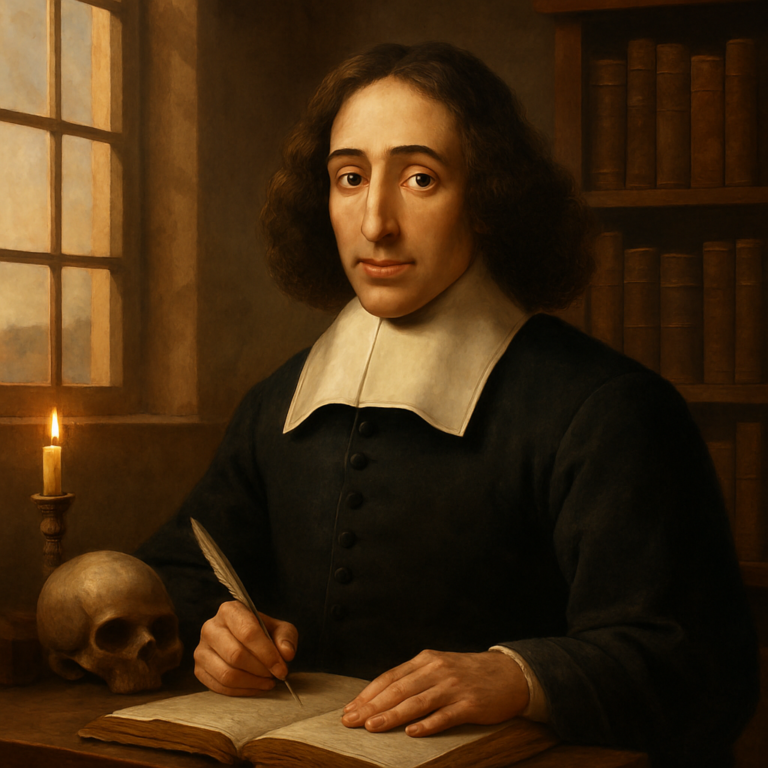
Freedom is often heralded as a fundamental aspect of human existence, yet its true nature eludes many. In this essay, I shall explore the concept of freedom through the lens of Spinozist philosophy, examining how our understanding of freedom intersects with ethics, determinism, and the human experience. In doing so, I hope to clarify Spinoza’s perspective and prompt further reflection on the implications of his ideas.
Defining Freedom
To embark on this exploration, we must first define what is meant by “freedom.” Commonly, freedom is associated with the idea of choice—an ability to act according to one’s own will without external constraints. Yet, this notion raises questions. Is freedom merely a matter of having options? Or does it involve a deeper understanding of necessity and essence? For Spinoza, freedom transcends mere choice; it is intrinsically linked to understanding and knowledge.
Spinoza’s Conception of Freedom
In Spinoza’s Ethics, he posits that true freedom arises from understanding the nature of reality and our position within it. He famously argues that everything in the universe operates according to the necessity of the divine (or Nature), and thus, our actions are not free in the traditional sense. Instead, they are expressions of the underlying causal framework of existence. Freedom, for Spinoza, is defined as the ability to act according to one’s own nature, which is informed by rational understanding.
- Determinism vs. Freedom: Spinoza’s philosophical system is grounded in a deterministic view of the universe. This raises the question: how can one be free if all actions are determined by prior causes? Spinoza would argue that freedom does not mean the absence of determination, but rather the alignment of one’s desires with the rational understanding of oneself and the world.
- Knowledge and Power: Spinoza posits that as we increase our understanding of the world, we also enhance our power and ability to navigate it. Thus, freedom is closely linked to knowledge. The more we know about the causes that affect us, the more we can align our actions with our true nature, leading to greater fulfillment.
The Ethical Dimension of Freedom
This understanding of freedom has profound ethical implications. If freedom is about acting in accordance with one’s nature, it follows that ethical behavior is not merely about following external rules or societal norms but rather about understanding oneself and one’s place in the larger web of existence. Ethical behavior, then, becomes an expression of one’s true nature, which is inherently rational and seeks harmony with the universe.
Contrasting Views: The Libertarian Perspective
To further illuminate Spinoza’s view, we might consider the libertarian perspective on freedom, which emphasizes individual autonomy and the absence of external constraints. Libertarians argue that true freedom is the ability to choose among options without interference. However, this perspective can lead to a fragmented understanding of the self, where individuals are viewed as isolated agents operating independently of the larger context of society and nature.
Spinoza’s critique of this viewpoint would focus on the illusion of autonomy perceived by those who do not recognize the deterministic nature of existence. He would argue that such a view neglects the interconnectedness of all beings and the importance of understanding the causes that govern our actions. Thus, while libertarians may advocate for freedom from constraints, Spinoza invites us to reconsider what it means to be truly free within the framework of necessity.
Practical Implications of Spinoza’s Freedom
Understanding freedom in the Spinozist sense carries significant practical implications. If we accept that true freedom is rooted in rational understanding and alignment with our nature, we are called to engage in self-reflection and self-knowledge. This process involves examining our emotions, desires, and motivations to understand the causes that shape our actions.
- Self-Examination: Individuals are encouraged to engage in introspective practices that promote self-awareness. This may involve recognizing how external influences shape our desires and actions, allowing us to discern which of these are authentic to our nature.
- Ethical Living: By understanding our interconnectedness with others and the universe, we can cultivate a sense of empathy and compassion. Ethical living, in this view, emerges as a natural expression of our rational understanding of harmony and unity within the broader context of existence.
- Resilience in the Face of Challenges: A Spinozist approach to freedom allows for a deeper resilience in the face of life’s challenges. By recognizing that many circumstances are beyond our control, we can focus on how we respond to these circumstances, cultivating inner peace and strength.
Questions for Reflection
As we consider Spinoza’s conception of freedom, several questions arise that invite further reflection:
- What does it mean to act in accordance with one’s true nature? How can one discern this nature amidst societal expectations and pressures?
- How does our understanding of freedom shape our ethical decisions? Are we guided more by rational understanding or by external influences?
- In a world increasingly characterized by complexity and interdependence, how can we foster a sense of collective freedom that respects individual autonomy while acknowledging our shared humanity?
Conclusion
In conclusion, the exploration of freedom through a Spinozist lens reveals a profound understanding of what it means to be free. Freedom is not merely the absence of constraints but is deeply rooted in knowledge, understanding, and the alignment of our actions with our true nature. By embracing this perspective, we can cultivate a more ethical, empathetic, and resilient approach to life, ultimately leading to a richer experience of existence. As we navigate the complexities of our modern world, Spinoza’s insights offer a guiding light, inviting us to reflect on our nature and our interconnectedness with all that is.