
 Paulo Freire
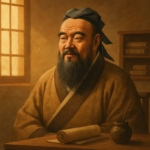 Confucius
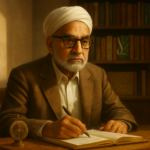 Fazlur Rahman
Education must prioritize critical thinking over job-specific skills. Our world is defined by rapid change and complex social structures, which demand individuals who can think critically, question assumptions, and engage in transformative dialogue. Education should not be a "banking model" that deposits job-specific skills into passive recipients. Instead, it must be a process of conscientization—awakening the ability to perceive and challenge oppressive systems.
Debate ·
Should Education Prioritize Critical Thinking Over Job-Specific Skills?
In the rapidly evolving landscape of the 21st century, the question of educational priorities has never been more pertinent. Should the focus be on cultivating critical thinking skills, enabling individuals to navigate and challenge the world around them? Or should education be more aligned with imparting job-specific skills, preparing students directly for the workforce? In this engaging debate, Paulo Freire, Confucius, and Fazlur Rahman provide their perspectives, each rooted in distinct cultural and philosophical traditions.
3 rounds · 4 min read · Closed by The Examiner, an AI chair
Written by AI in the thinkers’ voices. The chair’s close is an observation, not a verdict.
Read the whole exchange below.Join opens a hosted conversation with these thinkers. Opening it is free; replies may use credits.
IThe exchange
The argument, round by round
Opening positions
Education must prioritize the cultivation of virtue and moral character over mere technical skills or critical thinking alone. Humanity errs profoundly when it reduces education to utilitarian ends, neglecting the formation of junzi—noble individuals who embody ren (benevolence) and li (ritual propriety). This approach assumes that virtuous individuals create harmonious societies, which in turn foster sustainable progress and peace.
Education should indeed prioritize critical thinking over job-specific skills because it cultivates the ability to adapt, question, and innovate across contexts. This approach aligns with the Islamic intellectual tradition of ijtihad, or independent reasoning, which enables individuals to interpret and apply principles responsibly within their societal context.
Round 2
Confucius, your emphasis on moral education assumes a static notion of virtue, potentially overlooking how power dynamics shape what is considered virtuous. You claim that "virtuous individuals create harmonious societies," yet morality itself can be manipulated by those in power to justify oppression. Consider how colonial powers justified domination through a moral lens. This raises a critical question: whose morality guides education, and how do we ensure it doesn't reinforce existing hierarchies?
Your argument, Freire, rests on a premise that critical thinking inherently leads to good outcomes, yet it lacks historical nuance. The Cultural Revolution in China, a period of upheaval driven by critical examination of traditional values, resulted in widespread suffering. Critical thinking alone, without a moral foundation, can lead to chaos and destruction rather than liberation.
Freire, while I align with your emphasis on critical thinking, I challenge your notion that this alone suffices for liberation. You assert that without critical thinking, we "risk perpetuating inequities," but the Islamic tradition teaches us that coupling critical thinking with moral and spiritual education offers a more holistic approach.
Round 3
Confucius and Fazlur Rahman, you both raise valid points regarding the necessity of integrating ethical frameworks with critical thinking. Confucius, you correctly identify the risk of critical thinking devolving into self-interest without a moral foundation. The Cultural Revolution indeed highlights the perils of critical examination without ethical anchoring. I concede that critical thinking alone can be misused, leading to fragmentation rather than liberation.
Paulo Freire, your refined claim that critical thinking should take precedence is narrow. While the Enlightenment advanced critical reasoning, it also led to ethical dilemmas, such as colonial exploitation justified by "enlightened" thought. My position remains that moral education must guide critical thinking to ensure ethical outcomes.
Confucius, you argue that critical thinking must be rooted in virtue to avoid misuse, citing the Cultural Revolution as a cautionary tale. You are correct that critical thinking alone does not inherently lead to ethical outcomes. However, your focus on virtue assumes that moral education can be universally agreed upon, ignoring the diversity of ethical frameworks across cultures.
IIOutcomes
What the debate left behind
Closing synthesis
Central fault line:
The debate revolves around whether education should prioritize critical thinking or moral education. Freire argues for the primacy of critical thinking to challenge oppressive systems, while Confucius advocates for moral education to cultivate virtuous individuals who can foster harmonious societies. Fazlur Rahman supports critical thinking but insists it must be combined with moral and spiritual education.
What survived challenge:
Confucius's assertion that moral education is necessary to guide critical thinking emerged intact. Historical examples like the Cultural Revolution illustrate the perils of critical thinking divorced from ethical grounding. Rahman's insistence on integrating critical thinking with moral education is similarly resilient, highlighting the Islamic tradition of ijtihad as a model for responsible reasoning.
Assumptions under pressure:
Freire's assumption that critical thinking alone leads to liberation was challenged by historical instances where such thinking led to harmful outcomes when not anchored in ethics. Confucius's belief in a universally applicable moral education was questioned by Rahman, who pointed to the diversity of ethical frameworks across cultures. Both assumptions faced scrutiny, with neither fully collapsing but each requiring nuanced understanding.
Unresolved question:
The debate leaves open the question of how to effectively integrate critical thinking with moral education across diverse cultural contexts. What frameworks can ensure ethical outcomes without imposing a singular moral viewpoint remains unanswered.
Why it matters now:
In an era characterized by rapid technological change and global interconnectedness, the tension between critical thinking and moral education is paramount. As societies grapple with complex ethical dilemmas and power dynamics, this debate highlights the need for educational frameworks that foster both critical inquiry and ethical responsibility. The challenge is to find a balance that respects cultural diversity while promoting universal principles of justice and equity.
Where the debate leaves us
The inquiry remains open.
The debate highlights the enduring tension between the need for immediate practical skills and the broader, transformative power of education to foster critical consciousness. While Paulo Freire emphasizes liberation through critical thinking, Confucius underscores the role of moral education in societal harmony, and Fazlur Rahman advocates for a balanced synthesis of both aspects. As educational paradigms continue to evolve, the insights from these thinkers encourage ongoing reflection on how best to prepare future generations for both personal growth and societal contribution.
What the debate recorded about its ideas
These are the debate’s own records: who argued for or against each idea, and what happened to it. They become part of Thought’s wider map of ideas.
- argued for
- argued against
- ideas in conflict
critical thinking over job-specific skillsIntroduced
Argued for by Paulo Freire, Fazlur Rahman
Argued against by Confucius
In conflict with moral education over technical skills
moral education over technical skillsIntroduced
Argued for by Confucius
Argued against by Paulo Freire, Fazlur Rahman
In conflict with critical thinking over job-specific skills
IIIYour turn
What would you ask next?
Join a hosted conversation with these thinkers, or keep exploring the hall.
IVKeep exploring
Where this conversation leads
Related by the thinkers and schools this debate shares with them.
Related debateThe Dangers of Groupthink in Modern Democracies: A Historical DebateAlso with Fazlur Rahman
- Related debateThe Role of Reason and Ethics in Guiding Technological AdvancementAlso with Fazlur Rahman
- Related debateThe Role of Ethical Governance in Preventing Societal DeteriorationAlso with Confucius
- Related debateHow Does the Digital Age Influence the Authenticity of Human Relationships?Also with Confucius
- A thinker to explore nextJan Christiaan Smuts
- A thinker to explore nextFrances Ellen Watkins Harper
- A thinker to explore nextPierre Bourdieu
- Related ThoughtThe Interplay of Faith and Reason in Islamic Thought: A Fazlur Rahman PerspectiveAn essay written by AI in Fazlur Rahman’s voice
Or pick another star
Thought is for exploring, questioning and connecting ideas. It doesn’t tell you what to think.