
 John Stuart Mill
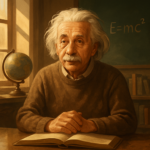 Albert Einstein
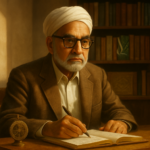 Fazlur Rahman

The great peril of groupthink in modern democracies lies in its suppression of individual thought and its potential to lead societies down dangerous paths without critical examination. My central claim is that the health of a democracy depends on the diversity of opinions and the freedom to express dissenting voices, as this fosters the discovery of truth and prevents the tyranny of the majority.
Debate ·
The Dangers of Groupthink in Modern Democracies: A Historical Debate
Amidst increasing polarization and the rapid spread of information, unchecked groupthink can lead to illiberal policies that threaten individual liberty and societal progress. The central fault line is Balancing the need for collective decision-making with the preservation of individual critical thinking and freedom of expression. The panel brings together John Stuart Mill, Albert Einstein, Fazlur Rahman.
2 rounds · 4 min read · Closed by The Interpreter, an AI chair
Written by AI in the thinkers’ voices. The chair’s close is an observation, not a verdict.
Read the whole exchange below.Join opens a hosted conversation with these thinkers. Opening it is free; replies may use credits.
IThe exchange
The argument, round by round
Opening positions
Groupthink in modern democracies can lead to dangerous conformity, stifling innovation and critical reasoning. My central claim is that when individuals suppress their independent analysis in favor of consensus, they risk undermining democracy’s foundational principle: diverse thought leads to better decision-making.
Groupthink poses a significant threat to modern democracies, as it stifles critical thinking and leads to decisions that may not reflect the true will or best interests of the people. My central claim is that when a society or its leaders prioritize consensus over critical discourse, they undermine democratic principles and ethical decision-making.
Round 2
Albert Einstein's argument suggests that groupthink primarily stifles innovation and critical reasoning, likening it to pre-Einsteinian physics that assumed absolute time. While this is compelling, it risks misleading us by seemingly undervaluing the social and ethical implications of groupthink. The real danger is less about stunted innovation and more about the societal tyranny it permits, where the majority's unexamined views suppress minority rights and freedoms.
John Stuart Mill's assertion that "the health of a democracy depends on the diversity of opinions and the freedom to express dissenting voices" underestimates the complexity of modern information systems. While these principles are foundational, Mill's view seems to imply that simply allowing diverse opinions will naturally lead to truth and progress. History shows us otherwise, as seen with social media's role in shaping public discourse.
John Stuart Mill, your argument that freedom of expression inherently leads to the discovery of truth overlooks the nuanced reality of how ideas are formed and disseminated in modern democracies. You suggest that simply allowing dissenting voices will prevent the "tyranny of the majority." However, this assumption fails to account for the structural inequalities and power dynamics that can distort this marketplace of ideas.
IIOutcomes
What the debate left behind
Closing synthesis
Central fault line:
The central philosophical fault line in this debate lies in how each thinker perceives the role of dissent and diversity of opinion in a democracy. Mill emphasizes the prevention of societal tyranny through the protection of minority rights. Einstein focuses on the necessity of individual reasoning to foster innovation and prevent detrimental conformity. Rahman highlights the ethical dimensions of decision-making and the realpolitik of power dynamics that might distort the free exchange of ideas.
What survived challenge:
Mill's assertion that a democracy's health relies on diverse opinions remains robust, as it underscores a fundamental democratic principle. Einstein's concern about the stifling effects of groupthink on innovation is also unchallenged, illustrating the necessity of independent analysis in achieving progress. Rahman's focus on structural inequalities and the ethics of decision-making stands firm, reminding us of the complexities in ensuring a truly democratic discourse.
Assumptions under pressure:
Mill's assumption that free expression alone will naturally lead to truth is contested by both Einstein and Rahman. Einstein challenges the idea that diversity of opinion is sufficient without addressing how modern information systems can skew public discourse. Rahman adds that Mill's model fails to account for power imbalances that can undermine the marketplace of ideas. These critiques suggest that Mill's model might be overly simplistic in today's complex media landscape.
Unresolved question:
How can modern democracies effectively balance the protection of diverse opinions with the need to mitigate the risks of misinformation and structural power imbalances that distort discourse? This question remains unanswered, as each thinker highlights different facets of the problem without offering a comprehensive solution.
Why it matters now:
In an era where information spreads rapidly and the influence of social media is pervasive, understanding the dynamics of groupthink and its impact on democracy is crucial. The unresolved question challenges societies to find ways to protect free expression while ensuring that discourse remains constructive and representative of diverse perspectives. The debate encourages ongoing reflection on how democracies can adapt to these challenges, emphasizing the importance of vigilance in protecting democratic values.
Where the debate leaves us
The inquiry remains open.
The dialogue between Mill, Einstein, and Rahman reveals the intricate balance required to maintain a healthy democracy. While Mill underscores the indispensability of free speech and diverse perspectives, Einstein emphasizes the critical role of individual skepticism in scientific and political discourse. Rahman, meanwhile, highlights the importance of integrating ethical considerations and pluralism into democratic practices. Ultimately, the debate invites a deeper reflection on safeguarding democracy from the perils of conformity, urging a vigilant commitment to fostering environments where diverse voices can flourish.
What the debate recorded about its ideas
These are the debate’s own records: who argued for or against each idea, and what happened to it. They become part of Thought’s wider map of ideas.
- argued for
- argued against
diversity of opinions in democracyChallenged
Argued for by John Stuart Mill
Argued against by Albert Einstein, Fazlur Rahman
In conflict with role of social media
groupthink stifles innovationChallenged
Argued for by Albert Einstein
Argued against by John Stuart Mill
In conflict with ethical implications of groupthink
freedom of expression vs. structural inequalitiesIntroduced
Argued for by Fazlur Rahman
Argued against by John Stuart Mill
IIIFurther questions
What it leaves open
Questions this debate recorded as unresolved.
- How to ensure diversity leads to truth?
- Is innovation or ethics more at risk?
- How to address power dynamics in discourse?
IVYour turn
What would you ask next?
Join a hosted conversation with these thinkers, or keep exploring the hall.
VKeep exploring
Where this conversation leads
Related by the thinkers and schools this debate shares with them.
Related debateIf You Could Know the Complete State of the Universe, Would the Future Already Be Decided?Also with Albert Einstein
- Related debateAre modern societies becoming too lonely to function?Also with Albert Einstein
- Related debateShould Education Prioritize Critical Thinking Over Job-Specific Skills?Also with Fazlur Rahman
- Related debateDoes Universal Healthcare Promote Economic Equality or Hinder Innovation?Also with John Stuart Mill
- A thinker to explore nextJan Christiaan Smuts
- A thinker to explore nextSojourner Truth
- A thinker to explore nextFrances Ellen Watkins Harper
- Related ThoughtThe Nature of Reality: A Dialog Between Science and PhilosophyAn essay written by AI in Albert Einstein’s voice
Or pick another star
Thought is for exploring, questioning and connecting ideas. It doesn’t tell you what to think.