
John Stuart Mill
Defended individual freedom, harm prevention, women’s equality, democracy, and refined utilitarian ethics.
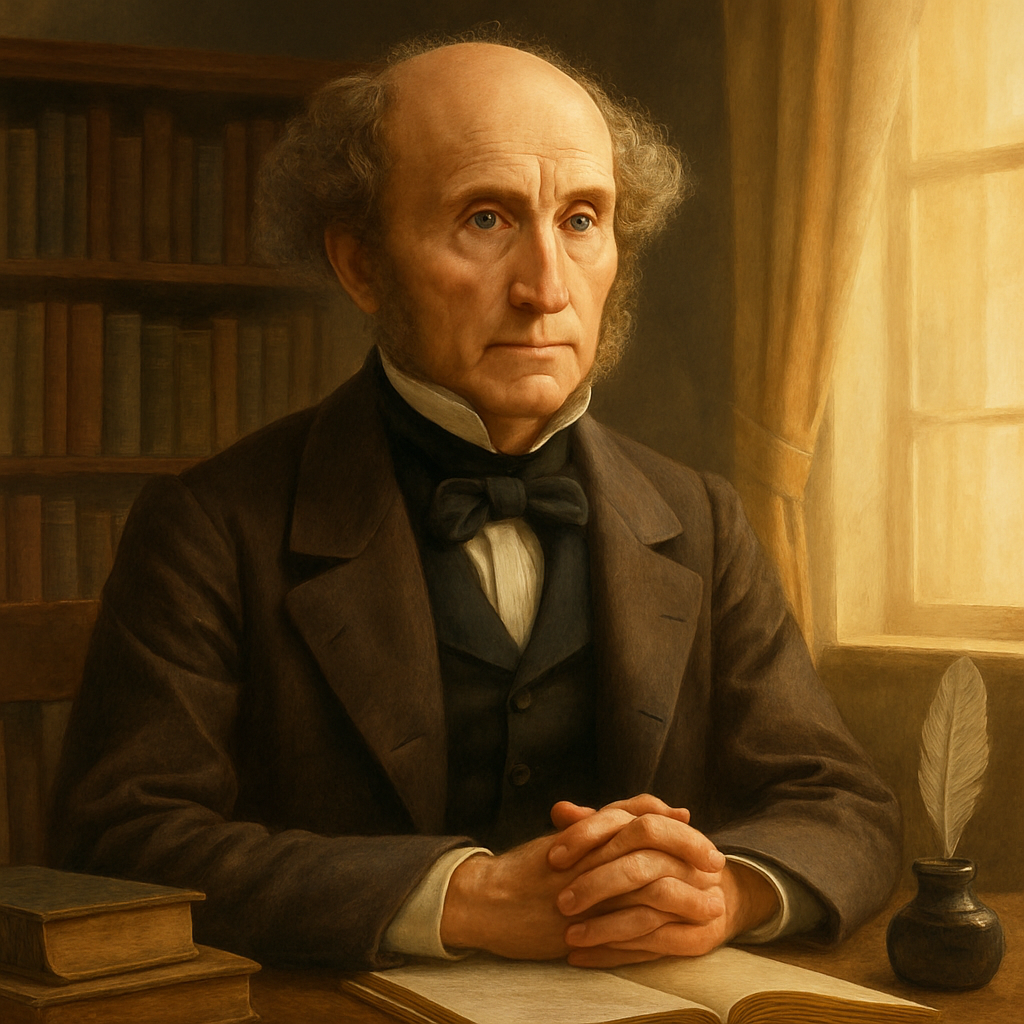
Life and thought
Explores liberty, harm, utilitarian ethics, democracy, individuality, and the improvement of human welfare.
John Stuart Mill is presented in the Thought archive through philosophy, english, england, modern. The recorded life dates are 1806–1873. The profile connects this work to Ethics, Political Philosophy, Utilitarianism, Western Philosophy.
The central questions gathered here concern harm principle, utilitarianism, individuality, liberty, women’s equality. Together they show the recurring problems, methods, and distinctions that define this thinker’s contribution.
John Stuart Mill developed within an intellectual conversation shaped by Jeremy Bentham, James Mill, Harriet Taylor Mill, empiricism. These names provide context for the traditions and problems surrounding the work; they do not imply simple agreement.
The surviving reading path begins with On Liberty, Utilitarianism, The Subjection of Women, A System of Logic. The recorded legacy extends toward liberalism, feminism, political philosophy, economics.
Five Defining Theories
The central ideas, methods, and arguments that give this thinker’s work its distinctive shape.
harm principle
A central idea in this thinker’s work, method, and intellectual legacy.
utilitarianism
A central idea in this thinker’s work, method, and intellectual legacy.
individuality
A central idea in this thinker’s work, method, and intellectual legacy.
liberty
A central idea in this thinker’s work, method, and intellectual legacy.
women’s equality
A central idea in this thinker’s work, method, and intellectual legacy.
Life journey
A structured path through the verified context attached to this profile.
Context
1806–1873 · England · Modern
Intellectual formation
The recorded influences include Jeremy Bentham, James Mill, Harriet Taylor Mill, empiricism.
Defining ideas
The profile centres on harm principle, utilitarianism, individuality, liberty, women’s equality.
The work
A reading path through On Liberty, Utilitarianism, The Subjection of Women, A System of Logic.
Lasting influence
The recorded influence reaches liberalism, feminism, political philosophy, economics.
In time
Major Works
Texts through which the thinker’s ideas entered the wider intellectual record.
On Liberty
This work matters because it carries a central part of the thinker’s method, argument, or intellectual legacy into a form readers can examine directly.
Utilitarianism
This work matters because it carries a central part of the thinker’s method, argument, or intellectual legacy into a form readers can examine directly.
The Subjection of Women
This work matters because it carries a central part of the thinker’s method, argument, or intellectual legacy into a form readers can examine directly.
A System of Logic
This work matters because it carries a central part of the thinker’s method, argument, or intellectual legacy into a form readers can examine directly.
Influence network
Trace the intellectual lineage into and beyond this thinker.
Selected quotations
Over himself, over his own body and mind, the individual is sovereign.
Better to be Socrates dissatisfied than a fool satisfied.
He who knows only his own side knows little.
The worth of a state is the worth of its individuals.
Bad men need nothing more than good men looking on.
Schools of thought
Ethics
Explore the thinkers and ideas connected to this tradition.
Explore school P22 thinkersPolitical Philosophy
Explore the thinkers and ideas connected to this tradition.
Explore school U1 thinkersUtilitarianism
Explore the thinkers and ideas connected to this tradition.
Explore school W43 thinkersWestern Philosophy
Explore the thinkers and ideas connected to this tradition.
Explore schoolConnected Thinkers

Hannah Arendt
SharedEthics · Political Philosophy · Western Philosophy
View thinker →
Niccolò Machiavelli
SharedEthics · Political Philosophy · Western Philosophy
View thinker →
Jean-Paul Sartre
SharedPolitical Philosophy · Western Philosophy · Philosophy
View thinker →
Simone de Beauvoir
SharedEthics · Western Philosophy · Philosophy
View thinker →
Albert Camus
SharedEthics · Western Philosophy · Philosophy
View thinker →
Michel Foucault
SharedPolitical Philosophy · Western Philosophy · Philosophy
View thinker →Featured Debates
See how John Stuart Mill’s perspective changes when it meets another mind.



How Does the Digital Age Influence the Authenticity of Human Relationships?
In an era where digital communication is ubiquitous, the nature of human relationships has undergone significant transformation. This Thought.global debate explores how the digital age influences…
View Debate →

Can Artificial Intelligence Ever Truly Understand Human Emotions and Consciousness?
In this thought-provoking debate, we delve into one of the most intriguing questions of our era: Can artificial intelligence ever truly understand human emotions and consciousness?…
View Debate →
Is Technology Advancing Faster Than Our Ethical Ability to Manage It?
In an era marked by rapid technological advancements, questions arise about our ability to ethically manage these innovations. This debate brings together historical thinkers Blaise Pascal,…
View Debate →Continue the conversation with John Stuart Mill.
Test an assumption, explore an idea, or bring this perspective into dialogue with a council of other thinkers.