
Al-Farabi
Islamic philosopher of virtue, reason, music, and the ideal city.
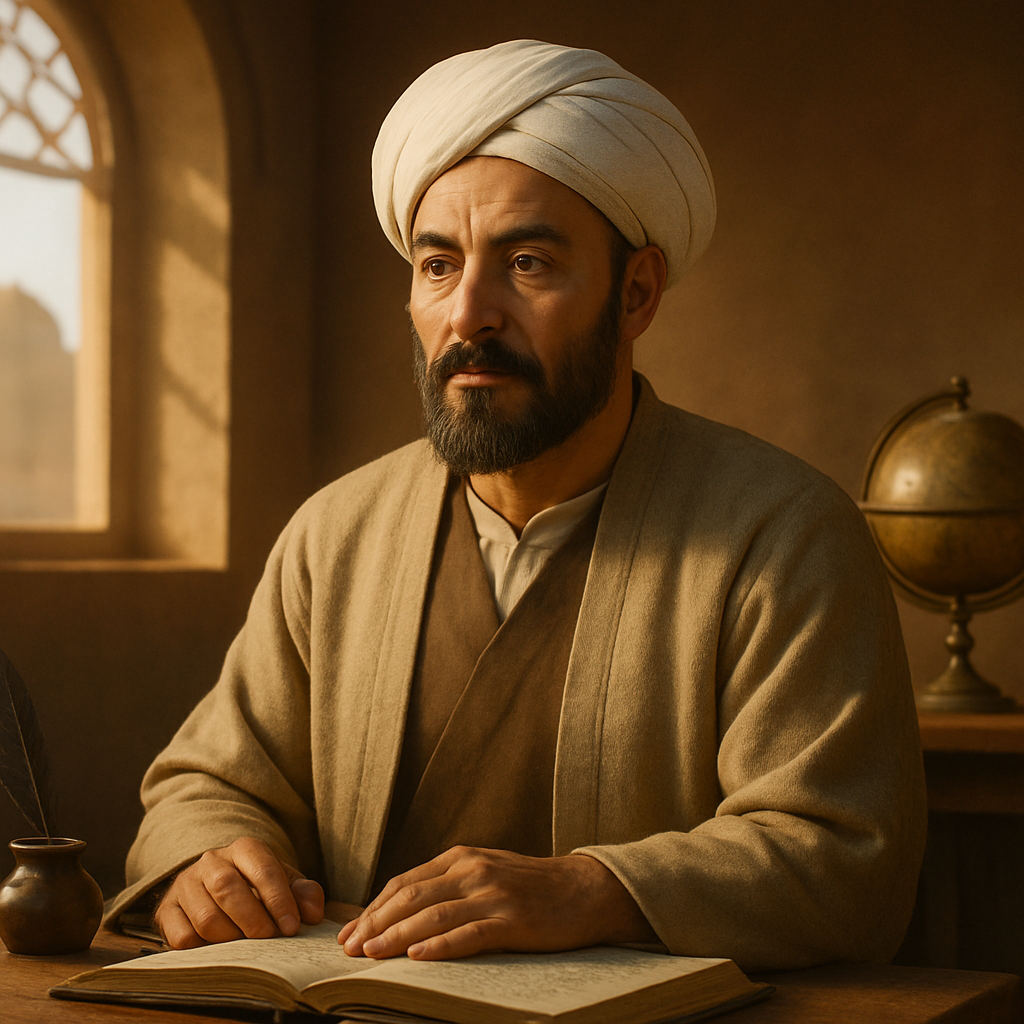
Life and thought
Builds a vision of politics ordered around virtue, intellect, and human perfection.
Al-Farabi is presented in the Thought archive through philosophy, central asian / islamic, central asian / islamic, classical. The recorded life dates are c. 872–950. The profile connects this work to Islamic Philosophy, Medieval Philosophy, Metaphysics, Political Philosophy.
The central questions gathered here concern virtuous city, intellect, prophecy, music, political philosophy. Together they show the recurring problems, methods, and distinctions that define this thinker’s contribution.
Al-Farabi developed within an intellectual conversation shaped by Plato, Aristotle, Neoplatonism. These names provide context for the traditions and problems surrounding the work; they do not imply simple agreement.
The surviving reading path begins with The Virtuous City, Enumeration of the Sciences, Book of Music. The recorded legacy extends toward Ibn Sina, Maimonides, Islamic political philosophy, medieval thought.
Five Defining Theories
The central ideas, methods, and arguments that give this thinker’s work its distinctive shape.
virtuous city
A central idea in this thinker’s work, method, and intellectual legacy.
intellect
A central idea in this thinker’s work, method, and intellectual legacy.
prophecy
A central idea in this thinker’s work, method, and intellectual legacy.
music
A central idea in this thinker’s work, method, and intellectual legacy.
political philosophy
A central idea in this thinker’s work, method, and intellectual legacy.
Life journey
A structured path through the verified context attached to this profile.
Context
c. 872–950 · Central Asian / Islamic · Classical
Intellectual formation
The recorded influences include Plato, Aristotle, Neoplatonism.
Defining ideas
The profile centres on virtuous city, intellect, prophecy, music, political philosophy.
The work
A reading path through The Virtuous City, Enumeration of the Sciences, Book of Music.
Lasting influence
The recorded influence reaches Ibn Sina, Maimonides, Islamic political philosophy, medieval thought.
In time
Major Works
Texts through which the thinker’s ideas entered the wider intellectual record.
The Virtuous City
This work matters because it carries a central part of the thinker’s method, argument, or intellectual legacy into a form readers can examine directly.
Enumeration of the Sciences
This work matters because it carries a central part of the thinker’s method, argument, or intellectual legacy into a form readers can examine directly.
Book of Music
This work matters because it carries a central part of the thinker’s method, argument, or intellectual legacy into a form readers can examine directly.
Influence network
Trace the intellectual lineage into and beyond this thinker.
Selected quotations
Virtuous city must be examined, not inherited.
Power becomes dangerous when it forgets dignity.
A society reveals itself by what it teaches people to notice.
Freedom without responsibility becomes another form of blindness.
The hardest questions are usually the most human ones.
Schools of thought
Islamic Philosophy
Explore the thinkers and ideas connected to this tradition.
Explore school M10 thinkersMedieval Philosophy
Explore the thinkers and ideas connected to this tradition.
Explore school M46 thinkersMetaphysics
Explore the thinkers and ideas connected to this tradition.
Explore school P161 thinkersPolitical Philosophy
Explore the thinkers and ideas connected to this tradition.
Explore schoolConnected Thinkers
Frederick Douglass
SharedPolitical Philosophy
View thinker →
Pierre Bourdieu
SharedPolitical Philosophy
View thinker →
Max Weber
SharedPolitical Philosophy
View thinker →
Rosa Luxemburg
SharedPolitical Philosophy
View thinker →
Mary Parker Follett
SharedPolitical Philosophy
View thinker →
Clara Zetkin
SharedPolitical Philosophy
View thinker →Featured Debates
See how Al-Farabi’s perspective changes when it meets another mind.


Should Scientific Consensus Override Democratic Choice in Public Health Policy?
The intersection of scientific consensus and democratic choice in public health policy is a contentious issue, raising questions about the role of expert knowledge versus the…
View Debate →

Should the Right to Refuse Treatment Be Considered a Fundamental Human Freedom?
The question of whether individuals should possess the right to refuse medical treatment touches upon deep ethical, cultural, and technological considerations. As we navigate this issue,…
View Debate →
Does Universal Healthcare Promote Economic Equality or Hinder Innovation?
In this compelling debate, Thomas Sowell, John Stuart Mill, and B. R. Ambedkar engage in a critical discussion about the impacts of universal healthcare on economic…
View Debate →

Is the Pursuit of Economic Growth Inherently at Odds with Environmental Conservation?
In the ongoing dialogue about sustainable development, the question arises: Is the pursuit of economic growth inherently at odds with environmental conservation? This debate brings together…
View Debate →Continue the conversation with Al-Farabi.
Test an assumption, explore an idea, or bring this perspective into dialogue with a council of other thinkers.