
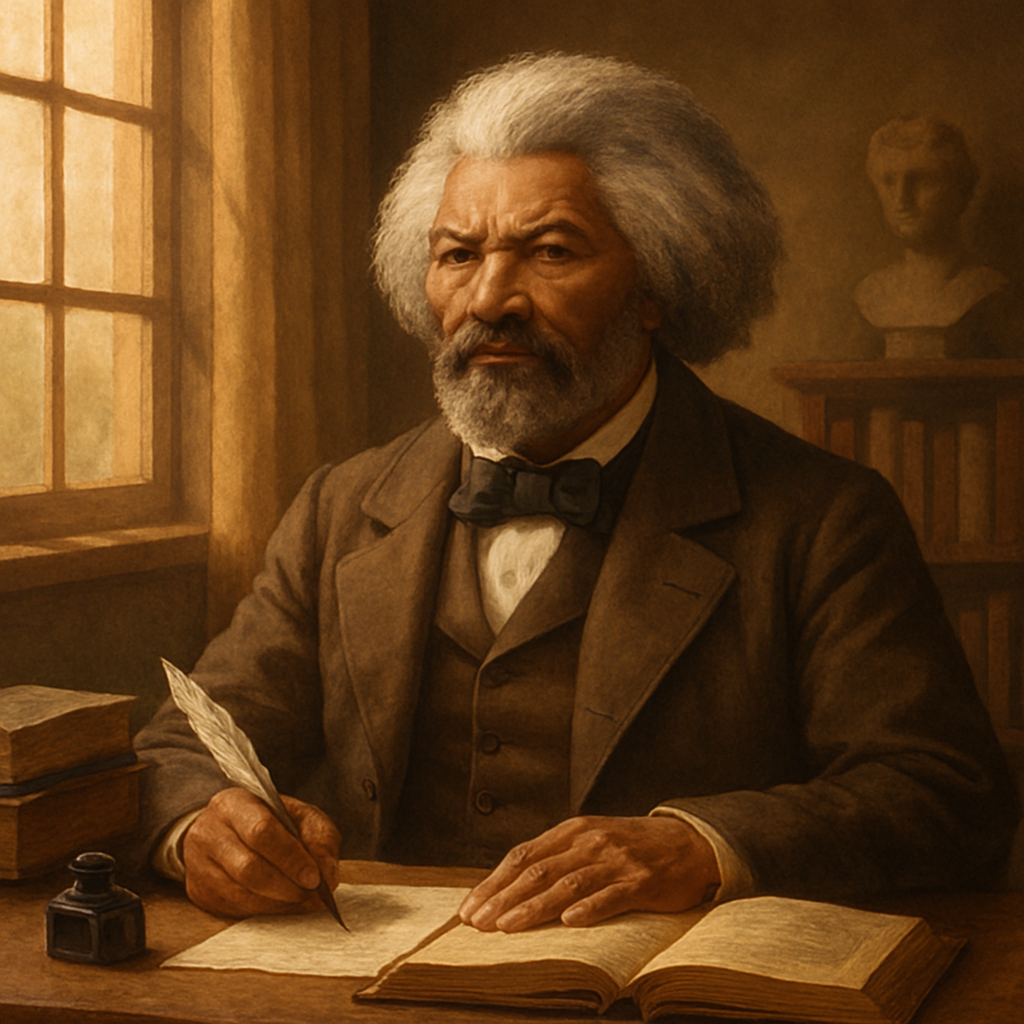
Frederick Douglass
Abolitionist thinker of freedom, literacy, citizenship, and moral courage.
Life and thought
Turns personal testimony and political argument into a powerful defense of freedom and citizenship.
Frederick Douglass is presented in the Thought archive through political thought, african american, african american, modern. The recorded life dates are 1818–1895. The profile connects this work to African American Thought, Ethics, Literature, Political Philosophy.
The central questions gathered here concern abolition, literacy, citizenship, freedom, constitutional democracy. Together they show the recurring problems, methods, and distinctions that define this thinker’s contribution.
Frederick Douglass developed within an intellectual conversation shaped by enslavement experience, abolitionism, American democracy. These names provide context for the traditions and problems surrounding the work; they do not imply simple agreement.
The surviving reading path begins with Narrative of the Life of Frederick Douglass, My Bondage and My Freedom, speeches. The recorded legacy extends toward civil rights, abolitionist thought, democratic theory.
Five Defining Theories
The central ideas, methods, and arguments that give this thinker’s work its distinctive shape.
abolition
A central idea in this thinker’s work, method, and intellectual legacy.
literacy
A central idea in this thinker’s work, method, and intellectual legacy.
citizenship
A central idea in this thinker’s work, method, and intellectual legacy.
freedom
A central idea in this thinker’s work, method, and intellectual legacy.
constitutional democracy
A central idea in this thinker’s work, method, and intellectual legacy.
Life journey
A structured path through the verified context attached to this profile.
Context
1818–1895 · African American · Modern
Intellectual formation
The recorded influences include enslavement experience, abolitionism, American democracy.
Defining ideas
The profile centres on abolition, literacy, citizenship, freedom, constitutional democracy.
The work
A reading path through Narrative of the Life of Frederick Douglass, My Bondage and My Freedom, speeches.
Lasting influence
The recorded influence reaches civil rights, abolitionist thought, democratic theory.
In time
Major Works
Texts through which the thinker’s ideas entered the wider intellectual record.
Narrative of the Life of Frederick Douglass
This work matters because it carries a central part of the thinker’s method, argument, or intellectual legacy into a form readers can examine directly.
My Bondage and My Freedom
This work matters because it carries a central part of the thinker’s method, argument, or intellectual legacy into a form readers can examine directly.
speeches
This work matters because it carries a central part of the thinker’s method, argument, or intellectual legacy into a form readers can examine directly.
Influence network
Trace the intellectual lineage into and beyond this thinker.
Selected quotations
Abolition must be examined, not inherited.
Power becomes dangerous when it forgets dignity.
A society reveals itself by what it teaches people to notice.
Freedom without responsibility becomes another form of blindness.
The hardest questions are usually the most human ones.
Schools of thought
African American Thought
Explore the thinkers and ideas connected to this tradition.
Explore school E122 thinkersEthics
Explore the thinkers and ideas connected to this tradition.
Explore school L23 thinkersLiterature
Explore the thinkers and ideas connected to this tradition.
Explore school P151 thinkersPolitical Philosophy
Explore the thinkers and ideas connected to this tradition.
Explore schoolConnected Thinkers
Frances Ellen Watkins Harper
SharedAfrican American Thought · Ethics · Literature
View thinker →
Sojourner Truth
SharedAfrican American Thought · Ethics · Political thought
View thinker →
Patricia Hill Collins
SharedAfrican American Thought · Ethics · African american
View thinker →
Rosa Luxemburg
SharedPolitical Philosophy · Political thought · Modern
View thinker →
Clara Zetkin
SharedPolitical Philosophy · Political thought · Modern
View thinker →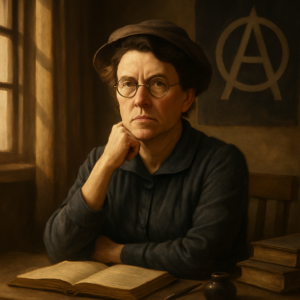
Emma Goldman
SharedPolitical Philosophy · Political thought · Modern
View thinker →Featured Debates
See how Frederick Douglass’s perspective changes when it meets another mind.



The Legitimacy of Punishment and the Absurdity of Justice
The Legitimacy of Punishment and the Absurdity of Justice
View Debate →


The Fragility of Belonging: Deconstructing Community Norms in a Global Age
The Fragility of Belonging: Deconstructing Community Norms in a Global Age
View Debate →

The Function of Education in Shaping Human Subjects
The Function of Education in Shaping Human Subjects
View Debate →


The Role of Religion in the Modern Political Sphere
The Role of Religion in the Modern Political Sphere
View Debate →Continue the conversation with Frederick Douglass.
Test an assumption, explore an idea, or bring this perspective into dialogue with a council of other thinkers.