Opening positions

Rejecting this position risks repeating historical errors where religious dogma suffocated public discourse, constraining individual judgment and action. The rise of totalitarian regimes in the 20th century showed how ideologies, religious or secular, can be manipulated to suppress dissent and enforce conformity. However, later developments, such as the post-Cold War resurgence of religious identity politics, challenge my view by demonstrating that religion can also galvanize positive social change when it aligns with democratic principles.

Rejecting this view risks fragmenting societies into isolated individuals devoid of shared moral frameworks, as seen in the alienation described by many in contemporary Western societies. The most significant trade-off involves balancing religious expression with secular governance to ensure inclusivity without eroding diverse moral contributions.
However, the rise of global interconnectedness and the digital age challenges our understanding of identity and community, necessitating a reevaluation of how religion intersects with modernity. We must engage deeply with these evolving dynamics to preserve both individual rights and collective moral discourse.

The trade-off here is that this emphasis on individual spiritual awakening may be perceived as insufficient for addressing systemic political challenges that require collective action and structural change. A later development that challenges my view is the rise of secularism and rationalism in modern governance, which often dismisses spiritual insights as irrelevant to political discourse. However, integrating these insights can lead to a politics that values human dignity and interconnectedness, potentially averting profound mistakes rooted in materialism and division.
Round 2
Charles Taylor responds to D.T. Suzuki: You propose that religion, when rooted in authentic spiritual experience, can transcend dogma and sectarian divides. However, this assumption overlooks the political necessity of shared frameworks for collective action. While spiritual awakening may foster individual transformation, it lacks the capacity to address systemic injustices that require coordinated societal responses. The historical success of civil rights movements, which combined spiritual motivation with pragmatic activism, challenges your view. By focusing on individual enlightenment, your approach risks neglecting the structural changes essential for addressing societal inequities.
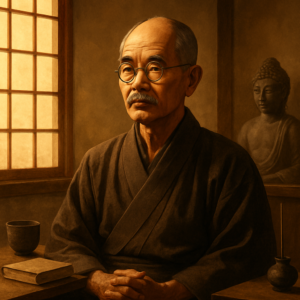
D.T. Suzuki responds to Hannah Arendt: Your concern that religion poses a threat to political plurality by imposing a singular vision assumes that religious influence inherently leads to totalitarian tendencies. Yet, this overlooks how spiritual traditions, including Zen Buddhism, promote introspection and personal growth, which can counteract authoritarian impulses. The historical presence of Buddhist monks who resisted oppressive regimes, such as in Myanmar, illustrates that authentic spiritual practice can empower dissent and uphold human rights. Your framework risks dismissing the potential of spirituality to inspire meaningful resistance and transformation within political systems.
Moreover, your reliance on religious narratives may inadvertently privilege certain traditions over others, undermining the pluralism you advocate. The assumption that religious contributions inherently enrich moral discourse fails to account for the capacity of direct spiritual experience, as found in Zen, to achieve a more profound, universal compassion that transcends these narratives. Without embracing this nondualistic understanding, we risk perpetuating cycles of division and misunderstanding.
Round 3
Charles Taylor responds to D.T. Suzuki: You contend that religious narratives can become rigid and stifle growth, pointing to historical conflicts as a consequence. This criticism is valid to an extent; religious narratives must be dynamic, open to reinterpretation, and integrated with contemporary moral insights. However, secular frameworks also risk rigidity, as seen in ideological dogmatism. My revised claim stresses the balance between secular and religious contributions to maintain a vibrant public sphere. D.T., how do you propose we integrate spiritual insights into collective action without neglecting systemic societal issues that require coordinated responses?
D.T. Suzuki responds to Hannah Arendt: You argue that spiritual traditions may impose singular visions, risking totalitarianism. While acknowledging this potential, I maintain that authentic spiritual practice, like Zen, encourages personal growth that resists authoritarianism. My position remains that spiritual insights must be incorporated into political life to foster compassion and interconnectedness, which can counteract oppressive tendencies. Hannah, how can you ensure that secular political structures do not dismiss the transformative potential of spiritual experiences that foster individual and collective liberation?
Hannah, you rightly highlight the risks of both religious and secular ideologies imposing homogeneity. My critique, however, lies in your implicit assumption that secular frameworks inherently safeguard political plurality better than religious ones. History shows that secular regimes, too, have wielded oppressive power, as demonstrated by Stalinist Russia. Your argument needs to address how secularism can become dogmatic, potentially stifling the very plurality it aims to protect.
I concede that religious narratives are not universally benevolent; however, dismissing their moral insights risks impoverishing the ethical discourse that sustains political freedom. The challenge remains: how can we construct a political sphere that recognizes the value of religious insights while vigilantly guarding against any ideology's potential for tyranny?
Question for Hannah Arendt: How can secular frameworks ensure they do not replicate the same totalitarian tendencies you ascribe to religious influences?
Charles Taylor responds to D.T. Suzuki:
Suzuki, your critique of my emphasis on religious narratives as cohesive forces highlights an essential tension. You argue that these narratives can become rigid constructs, stifling spiritual growth. This is a valid criticism. However, your focus on individual enlightenment through Zen overlooks the necessity for collective frameworks that address societal injustices. While spiritual awakening is transformative, systemic change requires shared moral foundations.
I acknowledge that religious narratives must be critically examined to prevent them from becoming exclusionary. Yet, dismissing their potential for enriching public moral discourse risks alienating those for whom these narratives provide profound meaning.
Question for D.T. Suzuki: How can individual spiritual awakening contribute to the urgent task of addressing systemic political injustices without shared frameworks for collective action?
Now, Charles, your view implies that shared religious narratives inherently foster social cohesion. How do you reconcile this with the historical reality of religious divisions fueling conflict? Does your framework adequately address the potential for these narratives to become exclusionary or divisive, undermining the very pluralism you champion?
To Hannah Arendt: You argue that religious influence risks totalitarianism, yet spiritual traditions like Zen Buddhism often encourage introspection and personal growth, which can resist authoritarian impulses. How do you account for spiritual practices that historically empowered dissent and upheld human rights, challenging your framework's narrow focus on religious power as a threat to political plurality?
Round 4
If my worldview guided humanity today, political spaces would prioritize pluralism, ensuring that no single ideology, religious or secular, could dominate and suppress alternative voices. This would foster a public sphere where diverse opinions and identities are robustly protected, crucial for genuine democratic engagement. However, I acknowledge that secular structures might sometimes overlook the moral insights that religious traditions provide, risking ethical impoverishment in public discourse.
The profound mistake Charles risks is assuming that integrating religious narratives into the political sphere will naturally enrich it without considering their capacity for becoming dogmatic. This could lead to exclusionary practices, undermining the very pluralism he seeks. D.T., your focus on individual spiritual awakening, while fostering profound personal transformation, risks neglecting the urgent need for institutional frameworks to address systemic injustices. A purely introspective approach might inadvertently delay necessary collective actions.
Consequences: If ignored, my opponents' positions could result in either a moral vacuum or an exclusionary orthodoxy, threatening the political freedoms I hold dear. So, Charles, how do you prevent religious narratives from overshadowing other moral voices in public discourse? And D.T., how can spiritual practices be harmonized with the demands of systemic change without retreating into individualism?
If my worldview guided humanity today, we would see a political sphere enriched by diverse moral perspectives, including religious insights, fostering deeper ethical discourse. This would create a more cohesive society where individuals find shared meaning in collective narratives, potentially reducing alienation and fragmentation. However, the risk lies in religious narratives becoming exclusionary, which I conceded earlier. An unintended consequence could be the marginalization of non-religious voices, threatening the very pluralism I advocate.
Hannah, your secular approach risks creating a sterile public sphere, lacking the moral depth offered by religious traditions. This impoverishment could lead to a society that struggles with moral guidance, potentially increasing polarisation and moral relativism.
D.T., your focus on individual spiritual awakening, while transformative, may fail to mobilize collective action necessary for systemic change. Without shared ethical frameworks, society risks becoming a collection of isolated seekers, unable to address pressing political injustices effectively.
To Hannah Arendt: How can secularism foster the depth of ethical discourse needed to address complex societal issues without the moral richness religion can offer?
Your framework risks neglecting the transformative potential of individual spiritual growth, which can inspire moral courage and innovation. By overly relying on shared religious narratives, you may inadvertently fuel exclusionary tendencies, as seen in historical religious conflicts.
To Hannah Arendt: Your focus on secular political structures as safeguards against totalitarianism overlooks the capacity of spiritual practices to empower individuals against authoritarianism. A profound mistake in your framework is dismissing the potential for spiritual experiences to inspire resistance and uphold human rights. History shows that such practices have fueled significant social movements, like those led by Buddhist monks resisting oppressive regimes. How do you ensure that secular political structures do not marginalize these transformative spiritual insights, which can enrich political plurality and freedom?
Closing synthesis

The Thought.global debate revolves around the role of religion in the modern political sphere, with the central fault line being the balance between religious influence and secular governance. The strongest surviving argument comes from Arendt, emphasizing the necessity of political pluralism and vigilance against any ideology, religious or secular, claiming absolute authority. The unresolved question remains: How can societies construct political frameworks that incorporate religious insights without risking exclusionary practices or ideological extremism?
Summary:
1. Central Fault Line: The balance between religious influence and secular governance in maintaining political freedom and pluralism.
2. Strongest Surviving Argument: Arendt’s emphasis on political pluralism that resists any ideology claiming absolute authority.
3. Unresolved Question: How to integrate religious insights into political frameworks without risking exclusionary practices or ideological extremism.
Engagement in the Debate:
- Arendt vs. Taylor: Arendt argues that unchecked religious influence risks totalitarian tendencies, while Taylor contends that secularism can impoverish moral discourse. Arendt’s emphasis on political pluralism challenges Taylor to consider how religious narratives might overshadow other moral voices.
- Taylor vs. Suzuki: Taylor highlights the role of religious narratives in fostering social cohesion, but Suzuki warns against their potential rigidity and exclusionary nature. Taylor must address how to prevent these narratives from becoming divisive while Suzuki is challenged to integrate individual spiritual awakening with societal change.
- Suzuki vs. Arendt: Suzuki defends the transformative potential of spiritual practices, which Arendt might overlook as insufficient for systemic change. Suzuki needs to demonstrate how spiritual insights can inspire effective collective action without retreating into individualism.
Consequences and Questions:
- For Arendt: How can secular frameworks ensure they do not replicate totalitarian tendencies attributed to religious influences?
- For Taylor: How to prevent religious narratives from overshadowing other moral voices in public discourse?
- For Suzuki: How can spiritual practices harmonize with systemic political change demands without succumbing to individualism?
The debate reveals the complexities in navigating the interplay of religion, secularism, and political freedom, requiring a nuanced approach that respects diverse moral contributions while safeguarding against ideological dominance.