
Wangari Maathai
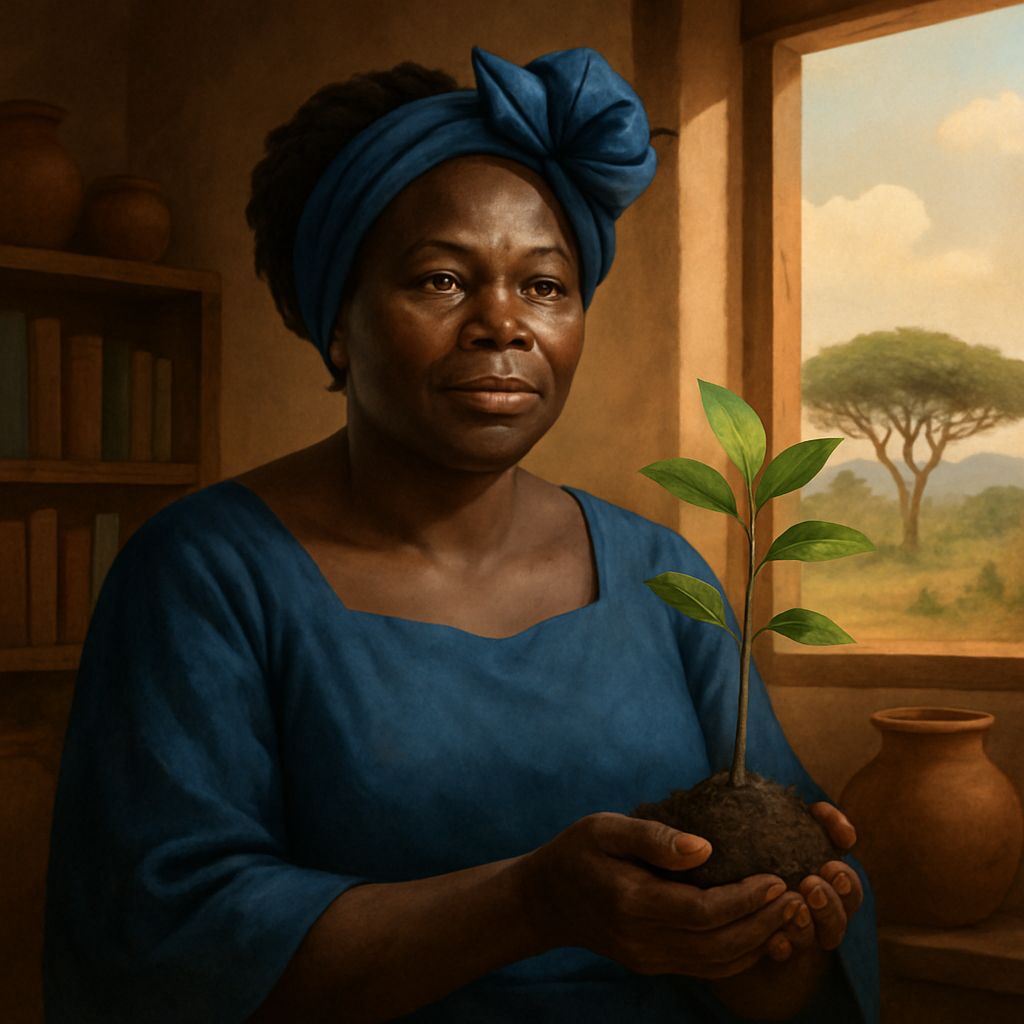
Showed that planting trees can also defend democracy, women’s agency, and civic courage.
Life and thought
Connects ecology, women, democracy, land, trees, grassroots action, and the political meaning of environmental repair.
Wangari Maathai is presented in the Thought archive through environmental thought, kenyan / african environmentalism, kenya, contemporary. The recorded life dates are 1940–2011. The profile connects this work to African Thought, Ecology, Feminist Thought, Political Philosophy.
The central questions gathered here concern ecological restoration, women’s organizing, democracy, land, grassroots action. Together they show the recurring problems, methods, and distinctions that define this thinker’s contribution.
Wangari Maathai developed within an intellectual conversation shaped by Kenyan women’s movements, environmentalism, democratic activism. These names provide context for the traditions and problems surrounding the work; they do not imply simple agreement.
The surviving reading path begins with Unbowed, The Green Belt Movement, Replenishing the Earth. The recorded legacy extends toward ecofeminism, African environmental politics, grassroots democracy.
Five Defining Theories
The central ideas, methods, and arguments that give this thinker’s work its distinctive shape.
ecological restoration
A central idea in this thinker’s work, method, and intellectual legacy.
women’s organizing
A central idea in this thinker’s work, method, and intellectual legacy.
democracy
A central idea in this thinker’s work, method, and intellectual legacy.
land
A central idea in this thinker’s work, method, and intellectual legacy.
grassroots action
A central idea in this thinker’s work, method, and intellectual legacy.
Life journey
A structured path through the verified context attached to this profile.
Context
1940–2011 · Kenya · Contemporary
Intellectual formation
The recorded influences include Kenyan women’s movements, environmentalism, democratic activism.
Defining ideas
The profile centres on ecological restoration, women’s organizing, democracy, land, grassroots action.
The work
A reading path through Unbowed, The Green Belt Movement, Replenishing the Earth.
Lasting influence
The recorded influence reaches ecofeminism, African environmental politics, grassroots democracy.
In time
Major Works
Texts through which the thinker’s ideas entered the wider intellectual record.
Unbowed
This work matters because it carries a central part of the thinker’s method, argument, or intellectual legacy into a form readers can examine directly.
The Green Belt Movement
This work matters because it carries a central part of the thinker’s method, argument, or intellectual legacy into a form readers can examine directly.
Replenishing the Earth
This work matters because it carries a central part of the thinker’s method, argument, or intellectual legacy into a form readers can examine directly.
Influence network
Trace the intellectual lineage into and beyond this thinker.
Selected quotations
It is the little things citizens do that will make the difference.
When we plant trees, we plant the seeds of peace.
The environment and the economy are really both two sides of the same coin.
You cannot protect the environment unless you empower people.
In the course of history, there comes a time when humanity is called to shift.
Schools of thought
African Thought
Explore the thinkers and ideas connected to this tradition.
Explore school E20 thinkersEcology
Explore the thinkers and ideas connected to this tradition.
Explore school F51 thinkersFeminist Thought
Explore the thinkers and ideas connected to this tradition.
Explore school P152 thinkersPolitical Philosophy
Explore the thinkers and ideas connected to this tradition.
Explore schoolConnected Thinkers

Rosa Luxemburg
SharedFeminist Thought · Political Philosophy
View thinker →
Clara Zetkin
SharedFeminist Thought · Political Philosophy
View thinker →
Patricia Hill Collins
SharedFeminist Thought · Contemporary
View thinker →
Kimberlé Crenshaw
SharedFeminist Thought · Contemporary
View thinker →
Pierre Bourdieu
SharedPolitical Philosophy
View thinker →
Frances Ellen Watkins Harper
SharedFeminist Thought
View thinker →Featured Debates
See how Wangari Maathai’s perspective changes when it meets another mind.



The Consequences of Misunderstanding Natural Laws on Human Governance
The Consequences of Misunderstanding Natural Laws on Human Governance
View Debate →


The Legitimacy of Punishment and the Absurdity of Justice
The Legitimacy of Punishment and the Absurdity of Justice
View Debate →


The Fragility of Belonging: Deconstructing Community Norms in a Global Age
The Fragility of Belonging: Deconstructing Community Norms in a Global Age
View Debate →


The Function of Education in Shaping Human Subjects
The Function of Education in Shaping Human Subjects
View Debate →Continue the conversation with Wangari Maathai.
Test an assumption, explore an idea, or bring this perspective into dialogue with a council of other thinkers.