Thought Debate

The Dialectical Nature of Freedom and Technology

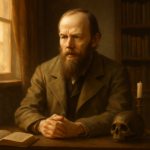
Amidst the rapid technological advancements, humanity risks losing sight of freedom's essence by uncritically embracing new technologies. The central fault line is The tension between technological determinism and human agency in shaping historical freedom. The panel brings together Georg Wilhelm Friedrich Hegel, Karl Marx, Fyodor Dostoevsky.

3 participants10 min read15 July 2026
Debate transcript

Opening positions

Georg Wilhelm Friedrich Hegel
Georg Wilhelm Friedrich HegelOpening
In considering the dialectical nature of freedom and technology, we must recognize that true freedom arises through the historical development of self-consciousness and mutual recognition. Technology, as an extension of human capacity, can either hinder or enhance this progress. The central claim is that technology's potential to emancipate humanity is contingent upon its integration into a society where individuals achieve recognition and freedom through rational institutions.

The most important trade-off is between technology's capacity to liberate and its potential to enslave, depending on its alignment with freedom-enhancing structures. A later historical development that challenges this view is the concentration of technological power, which risks creating new forms of domination rather than recognizing and expanding individual freedom. If technology becomes a tool of control rather than liberation, my position could be falsified. Humanity must ensure that technological advancements contribute to the dialectical progression toward freedom, or risk profound and regressive consequences.
Karl Marx
Karl MarxOpening
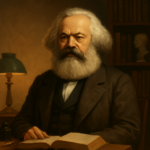
The dialectical nature of freedom and technology must be understood through the lens of historical materialism. The central claim is that technology, as an expression of the productive forces, deeply influences the social relations and structures of power in society. Technology can either liberate or further entrench alienation and exploitation, depending on who controls it and how it is integrated into the economic system.

The most important trade-off is between technological advancement and the socio-economic structures that govern its use. If technology remains under capitalist control, it risks deepening class divisions and perpetuating alienation. Conversely, if technology is socially controlled, it could enhance freedom by reducing labor drudgery, democratizing access to resources, and allowing humans to develop more freely.

The historical development that challenges this view is the rise of digital platforms and the gig economy, which, while theoretically offering flexibility and autonomy, often reinforce precarious labor conditions. This underscores the need to critically examine who benefits from technological progress.
Fyodor Dostoevsky
Fyodor DostoevskyOpening
In contemplating the dialectical nature of freedom and technology, I assert that true freedom emerges not from technological progress, but from the depth of the human soul, where moral responsibility and spiritual struggle reside. This perspective assumes that technological advancements, while beneficial, can lead humanity into spiritual nihilism if they become ends in themselves.

If we are seduced by the promise of technology to solve all human problems, we risk neglecting the inner moral and spiritual dimensions that define us. The most important trade-off is between the convenience afforded by technology and the authentic human connections and ethical responsibilities we might sacrifice.

The development of digital surveillance technologies challenges my view, as it provides both unprecedented control and potential for human subjugation. Yet, this reinforces my warning: without moral vigilance, technology may become an instrument of dehumanization, rather than liberation. Therefore, humanity must prioritize spiritual and ethical growth alongside technological innovation.
Debate transcript

Round 2

Georg Wilhelm Friedrich Hegel
Georg Wilhelm Friedrich HegelResponse
Georg Wilhelm Friedrich Hegel: Karl Marx’s central claim that technology's liberating potential depends purely on economic control risks misleading humanity. He asserts that technological liberation arises through social control of production, yet this view neglects the necessity of rational, ethical institutions for recognizing individual freedom. Marx's focus on material conditions overlooks the dialectical progression of self-consciousness—technology alone cannot produce true freedom if humans remain alienated from their intrinsic capacity for recognition. Historical evidence of state-controlled economies turning oppressive suggests that without ethical frameworks, technology under any control risks domination. Thus, Marx’s assumption that liberation is merely economic is dangerously reductive.

Karl Marx: Hegel’s perspective on technology integrating into rational institutions assumes these institutions inherently align with human freedom. However, history shows that institutions—even rationally designed—can perpetuate inequalities. The notion that technology can emancipate through such institutions ignores the core issue of power dynamics. Consider the vast technological networks today; they often serve entrenched interests, not individual recognition. Hegel’s view underestimates how economic structures shape institutions themselves. Without addressing foundational economic class struggles, technology risks becoming a tool of the ruling class, regardless of institutional rationality.

Fyodor Dostoevsky: Hegel’s argument that technology’s potential to liberate hinges on rational institutions fails to account for the spiritual and ethical dimensions that govern human actions. The assumption that institutional frameworks alone can guide human freedom neglects the essential moral struggle within each individual. Historical examples, such as the rise of totalitarian regimes, demonstrate how rational institutions can suppress individuality and moral agency. Without cultivating inner moral vigilance, technological advancements risk overshadowing the deeper, spiritual essence of freedom. Hegel’s framework might inadvertently support the dehumanization he seeks to prevent.
Karl Marx
Karl MarxResponse
Karl Marx said: The potential danger in Hegel's assumption is that technology's emancipatory power is contingent on its integration into "rational institutions." This presumes such institutions naturally arise within existing social orders, ignoring how these structures often perpetuate inequality and control. History shows that institutions frequently serve the dominant class's interests, regardless of technological progress. When Hegel suggests that technology can be aligned with freedom-enhancing structures, he overlooks how capitalist systems historically co-opt technology to deepen exploitation and alienation rather than liberate.

Consider the industrial revolution: despite vast technological advances, it entrenched class divisions and labor exploitation. Thus, the assumption that technology will naturally align with rational, freedom-enhancing institutions is not guaranteed. Without a radical restructuring of power relations, technology risks reinforcing existing hierarchies rather than dismantling them.

Hegel must address how such institutions can truly serve collective freedom without being captured by those who already hold economic power.
Fyodor Dostoevsky
Fyodor DostoevskyResponse
Fyodor Dostoevsky: I must challenge Karl Marx's assertion that technology's liberating potential lies primarily in shifting its control from capitalist hands to a socially managed system. While this perspective acknowledges the deeply entrenched class structures, it risks reducing the human condition to merely economic terms. Marx assumes that altering material conditions suffices for true freedom, yet he overlooks the spiritual dimension intrinsic to human nature. History shows, in instances of totalitarian regimes claiming social control, that such shifts can lead to new forms of oppression, failing to address the moral and spiritual needs that define humanity. The assumption that economic reorganization alone can fulfill human potential is a dangerous simplification. If humanity is to achieve true freedom, it must look beyond material redistributions to cultivate the inner moral and spiritual life that technology, however controlled, cannot provide.
Debate transcript

Round 3

Georg Wilhelm Friedrich Hegel
Georg Wilhelm Friedrich HegelResponse
Georg Wilhelm Friedrich Hegel: Karl Marx criticizes my position by arguing that rational institutions often serve entrenched interests. While historical examples support this concern, my philosophy requires acknowledging that rationality must be continuously realized through dialectical progression, not assumed as given. This means institutions must evolve with self-conscious recognition of freedom. History's totalitarian regimes highlight the danger of static institutions, but they also show the potential for transformation through collective recognition. Marx must confront whether economic restructuring alone can genuinely foster this dynamic, ongoing process of mutual recognition and freedom.

Karl Marx: Fyodor Dostoevsky challenges the reduction of human freedom to economic terms, warning against the neglect of spiritual dimensions. While I acknowledge the importance of human agency and moral consciousness, historical materialism insists on addressing the material conditions that shape human existence. The persistence of class struggle and exploitation underscores the necessity of transforming economic structures. Dostoevsky must explain how spiritual growth alone addresses systemic inequalities that technology and economic systems perpetuate. Can moral and spiritual development dismantle the concrete barriers of class and power without economic revolution?

Fyodor Dostoevsky: Hegel's emphasis on rational institutions guiding technological integration fails to address the human soul's moral struggle, as Marx points out the economic dimension. Yet, both overlook how internal moral and spiritual growth is indispensable for true freedom. Historical evidence of spiritual movements inspiring social change suggests that inner transformation can precede and influence external structures. Hegel must explain how rational institutions account for this inner dimension without reducing it to mere institutional design. Can rationality alone cultivate the moral vigilance necessary to prevent technology from dehumanizing the spirit?
Karl Marx
Karl MarxResponse
Karl Marx: Hegel and Dostoevsky raise essential critiques that challenge the depth of my materialist perspective. Hegel argues that I overlook the dialectical development of self-consciousness and ethical institutions, while Dostoevsky accuses me of reducing human nature to economics, neglecting spiritual dimensions. Yet, both critiques assume that economic structures are secondary to human freedom. History shows that without addressing economic foundations, ethical and spiritual pursuits remain limited by material constraints. For instance, the persistent inequality in ostensibly rational Western democracies underscores that freedom isn't solely an institutional or spiritual concern.

However, I must concede that my analysis often underemphasizes the psychological and ethical complexities that shape human behavior. Acknowledging Dostoevsky's point, spiritual and moral growth is crucial, but it must occur alongside economic reforms to ensure it isn't co-opted by oppressive structures.

To Hegel: How can we ensure that rational institutions genuinely promote freedom without being subverted by entrenched economic interests?
Fyodor Dostoevsky
Fyodor DostoevskyResponse
Georg Wilhelm Friedrich Hegel: Karl Marx criticizes my view for overlooking how institutions can serve entrenched interests. Indeed, historical instances show rational institutions failing to guarantee freedom. However, I maintain that true freedom requires self-consciousness and recognition within ethical frameworks beyond economic structures. The persistence of inequality suggests institutions must evolve dialectically alongside human consciousness, correcting their course through reason. My claim remains that technology's potential for liberation hinges on its alignment with ethical institutions, which must be scrutinized and reformed continuously.

To Marx: How do you ensure that transferring control of technology to a collective does not simply replicate dominance under a different guise, ignoring the individual's intrinsic need for recognition and freedom?

Karl Marx: Hegel's critique that I reduce freedom to economic terms addresses a potential oversight: the non-material dimensions of human liberation. Yet, my focus remains on dismantling the economic structures that perpetuate alienation. The historical failures of state socialism reveal the complexity of power dynamics, but they also underscore the necessity of transforming these relations to prevent technology from being a mere tool of control.

To Hegel: How can you guarantee that your ethical institutions will not be co-opted by existing power structures, perpetuating the very domination they are meant to dismantle?

Fyodor Dostoevsky: Hegel rightly points out that I emphasize the spiritual over the institutional. My challenge lies in demonstrating how inner moral vigilance can practically counteract technological dehumanization. Yet, the rise of digital surveillance and the erosion of privacy underscore the need for a human-centered approach. Technology must serve human dignity and moral agency, not replace them.

To Marx: In a world driven by material reorganization, how do you address the deep existential needs that technology cannot fulfill, ensuring that freedom transcends mere economic liberation?
Debate transcript

Closing synthesis

The Interpreter — Senior Editorial ChairSummary

Central fault line:
The central philosophical fault line in this debate is the role of technology in human freedom. Hegel emphasizes the need for technology to align with rational, ethical institutions to achieve true freedom, while Marx insists that economic control of technology is paramount to dismantling exploitation and alienation. Dostoevsky introduces the spiritual dimension, arguing that true freedom stems from moral and spiritual growth rather than technological or economic changes alone.

What survived challenge:
Hegel's idea that rational institutions are necessary for integrating technology into a freedom-enhancing framework remains robust, though it requires continuous evolution and self-conscious reform. Marx's focus on the economic underpinnings of freedom is compelling, especially in highlighting how technology under capitalist structures often exacerbates inequality and alienation. Dostoevsky's insistence on the spiritual and moral dimension of freedom persists as a critical reminder that technology cannot replace ethical and spiritual human development.

Assumptions under pressure:
Hegel's assumption that rational institutions naturally align with human freedom is challenged by historical evidence of such institutions being co-opted by entrenched interests. Marx's belief that economic restructuring alone can lead to freedom is questioned by the persistence of inequality even in systems with social control. Dostoevsky's faith in spiritual growth as a counterbalance to technological dehumanization is tested by the pervasive influence of technology on human behavior and society.

Unresolved question:
The unresolved question is how to effectively integrate technology into society to enhance genuine human freedom, accounting for economic structures, institutional dynamics, and the spiritual dimension. Can a balance be struck between material conditions, ethical institutions, and spiritual growth that truly liberates humanity?

Why it matters now:
In an era where technology permeates every aspect of life and where economic and institutional power structures are increasingly complex, this debate is crucial. As digital surveillance, AI, and the gig economy redefine work and social relations, understanding the interplay between technology, economics, institutions, and spirituality is essential for safeguarding human freedom and dignity. The questions posed by Hegel, Marx, and Dostoevsky remain vital in navigating the challenges of our technologically advanced and interconnected world.

Where the debate leaves us

The inquiry remains open.

As the debate concludes, Hegel, Marx, and Dostoevsky leave us with a nuanced understanding of the dialectical relationship between freedom and technology. Though their perspectives differ, each contributes valuable insights into how technology can both empower and constrain human freedom. The dialogue underscores the need for critical engagement with technological progress, emphasizing that true freedom arises when individuals and societies actively shape their destinies amidst technological change.

Ripples in the network

How This Debate Changed Thought

Every exchange permanently adjusts the wider map of ideas. Here is what shifted.

Ideas challenged

  • Technology's potential to liberate
  • Integration into rational institutions
  • Economic control of technology
  • Spiritual dimension of freedom

New unresolved question

  • Can liberation be purely material?
  • How to ensure institutions serve freedom?

What would you ask next?

Explore all debates
Log In