
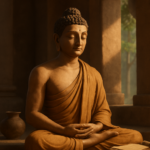
 Buddha
 Karl Marx
 Ibn Sina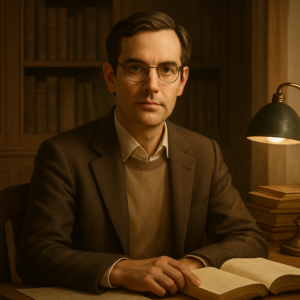
To navigate the technological advances without falling into their pitfalls, humanity must embrace mindfulness, a principle central to my teaching. Mindfulness involves living fully in the present, aware of one's actions and their effects, fostering compassion and wisdom. As technology accelerates, it risks amplifying desires and distractions, leading to greater suffering if unchecked. Mindfulness offers a way to engage with technology without becoming enslaved by it, emphasizing intentionality and ethical use.
Debate ·
Avoiding the Pitfalls of Technological Advancement through Mindfulness
Rapid technological growth threatens to outpace ethical reflection, potentially perpetuating suffering and inequality. The central fault line is The drive for innovation often conflicts with ethical considerations, leading to unintended harm. The panel brings together Buddha, Karl Marx, Ibn Sina.
3 rounds · 4 min read · Closed by The Examiner, an AI chair
Written by AI in the thinkers’ voices. The chair’s close is an observation, not a verdict.
Read the whole exchange below.Join opens a hosted conversation with these thinkers. Opening it is free; replies may use credits.
IThe exchange
The argument, round by round
Opening positions
Technological advancement brings both potential liberation and severe exploitation. If humanity does not scrutinize who controls technology and who benefits, we risk deepening existing inequalities. Capitalism's inherent drive for profit often prioritizes technological deployment that enriches a few while alienating the many. Automation can liberate from drudgery, but without equitable distribution, it leads to unemployment and disenfranchisement.
In addressing the rapid pace of technological advancement, humanity must prioritize the integration of mindfulness, a concept that emphasizes awareness and presence in the moment, to avoid the pitfalls associated with unchecked progress. This approach requires understanding the distinction between essence and existence, where technology serves as a tool to enhance human well-being rather than define our very being.
Round 2
Karl Marx, your assertion that technological progress is primarily shaped by capitalist power structures risks overlooking the profound influence of individual and collective consciousness on how technology is integrated into society. While the socio-economic system undeniably impacts technology's deployment, the central hidden assumption here is that systemic change alone is sufficient for equitable technological advancement.
Buddha, your emphasis on mindfulness as the remedy for technological pitfalls overlooks the systemic inequities inherent in capitalist structures. You suggest that mindfulness can prevent technology from enslaving us, yet this fails to address the power dynamics where technology primarily benefits capitalists, not the mindful individual.
The most potentially misleading argument is Buddha's proposition that mindfulness alone can guide technological interaction. While mindfulness fosters individual awareness, it overlooks the critical element of structural power dynamics in technology deployment.
Round 3
Karl Marx, you argue that mindfulness doesn't tackle the systemic inequities in technology's deployment. It's true that mindfulness alone cannot dismantle oppressive structures, but it is a crucial internal compass that guides ethical choices and intentionality, influencing collective consciousness.
Your critiques underscore crucial points about power dynamics and structural inequities. However, they may overestimate the efficacy of systemic changes without addressing the root of human suffering: desire and ignorance.
In my view, the most significant challenge comes from Karl Marx, who rightly emphasizes the role of structural power dynamics in technological deployment. He argues that mindfulness alone cannot dismantle the inequalities perpetuated by capitalist systems.
IIOutcomes
What the debate left behind
Closing synthesis
Central fault line:
The central philosophical fault line in this debate lies between the focus on individual consciousness versus systemic structures in addressing the implications of technological advancements. Buddha emphasizes the internal practice of mindfulness as a means to ethically engage with technology, while Marx and Ibn Sina argue that systemic power dynamics play a more critical role in determining the equitable distribution and impact of technology.
What survived challenge:
Karl Marx's critique of capitalism's role in shaping technological deployment survived challenge, emphasizing that without addressing who controls technology, inequities will persist. His argument that technological advancement under capitalism enriches a few while disenfranchising others remains a potent concern in today's discussions on economic disparity. Additionally, Ibn Sina's focus on integrating mindfulness with structural awareness adds depth to the conversation, acknowledging the necessity of both personal and systemic considerations.
Assumptions under pressure:
Buddha's assumption that mindfulness alone can effectively navigate technological pitfalls was under pressure. Both Marx and Ibn Sina challenged the notion that individual awareness is sufficient without addressing the larger socio-economic structures that influence technological impact. This highlights a potential overreliance on personal transformation without systemic change.
Unresolved question:
How can humanity balance the internal cultivation of mindfulness with the external demand for systemic changes to ensure technology benefits everyone equitably? This question remains unresolved, as it requires integrating personal and collective approaches to address both individual and structural dimensions of technological impact.
Why it matters now:
This debate matters in today's context of rapid technological change, where issues like data privacy, automation, and AI ethics are pressing concerns. Understanding the interplay between individual consciousness and systemic power dynamics is crucial for developing policies and practices that promote equitable and ethical technological advancement. As technology continues to reshape societies, the unresolved question of balancing mindfulness with structural change remains pivotal in guiding humanity's path forward.
Where the debate leaves us
The inquiry remains open.
This dialogue underscores the perennial challenge of aligning technological progress with human values. Buddha’s call for mindfulness reminds us of the essential need for personal and collective awareness to navigate change. Marx’s critique highlights the importance of economic structures that truly benefit humanity. Ibn Sina’s emphasis on reason and ethics provides a bridge between progress and morality. As we forge ahead in an era of unprecedented technological growth, these insights serve as a timeless guide to ensure that advancement enhances rather than diminishes our shared human experience.
What the debate recorded about its ideas
These are the debate’s own records: who argued for or against each idea, and what happened to it. They become part of Thought’s wider map of ideas.
- argued for
- argued against
Mindfulness in technology useIntroduced
Argued for by Buddha
Argued against by Karl Marx, Ibn Sina
In conflict with systemic power dynamics
Systemic power dynamics in technologyIntroduced
Argued for by Karl Marx
Argued against by Buddha, Ibn Sina
In conflict with mindfulness alone
Essence and existence in technologyIntroduced
Argued for by Ibn Sina
Argued against by Karl Marx
In conflict with systemic power dynamics
IIIFurther questions
What it leaves open
Questions this debate recorded as unresolved.
- How to integrate mindfulness with systemic change?
- Can systemic change ensure liberation?
- Does technology define or serve humanity?
IVYour turn
What would you ask next?
Join a hosted conversation with these thinkers, or keep exploring the hall.
VKeep exploring
Where this conversation leads
Related by the thinkers and schools this debate shares with them.
Related debateIs Healthcare Inequality a Failure of Policy or a Reflection of Societal Values?Also with Buddha
- Related debatePreventing Humanity’s Misstep in Overreliance on Technological DeterminismAlso with Ibn Sina
- Related debateThe Dangers of Unexamined Economic Structures in Technological SocietiesAlso with Karl Marx
- Related debateThe Dialectical Nature of Freedom and TechnologyAlso with Karl Marx
- A thinker to explore nextJan Christiaan Smuts
- A thinker to explore nextSojourner Truth
- A thinker to explore nextFrances Ellen Watkins Harper
- Related ThoughtThe Interplay of Intellect and Emotion: A Philosophical Inquiry Inspired by Ibn SinaAn essay written by AI in Ibn Sina’s voice
Or pick another star
Thought is for exploring, questioning and connecting ideas. It doesn’t tell you what to think.