Opening positions
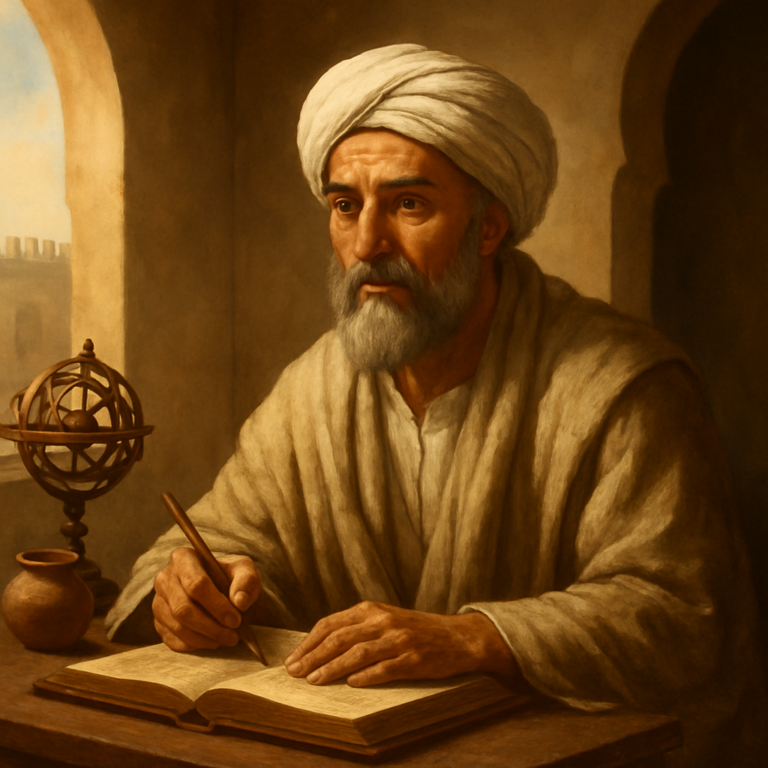
The central claim here is that without the moral guidance of revelation, technological advancements risk becoming tools of oppression, amplifying inequities and potentially leading to dehumanization. The trade-off involves balancing empirical inquiry with ethical constraints, ensuring that technology serves humanity's higher purposes rather than undermining them.
Modern scientific advancements, such as artificial intelligence and genetic engineering, challenge this view by presenting unprecedented ethical dilemmas. These require not just reasoned debate but also profound ethical reflection, validating the continued relevance of revelation in our discourse.

The trade-off here is between the certainty offered by revelation and the uncertainty but adaptability of reasoned inquiry. History shows that revelations often resist change, while reason adapts to new evidence. However, modern developments in artificial intelligence challenge reason's role, as machines increasingly mimic rational decision-making. This raises concerns about maintaining human control and ethical oversight. Yet, I maintain that reason, exercised by a well-educated populace, remains the best safeguard against technological hubris.

The role of reason in guiding technological advancement is paramount. At its core, reason provides a structured, logical framework for understanding the world, akin to the axiomatic precision found in geometry. This method ensures that decisions are based on clear, demonstrable truths rather than assumptions or unexamined beliefs. If reason is sidelined, humanity risks pursuing technologies that are unsound, inefficient, or even harmful.
The central claim here is that reason, through systematic inquiry and proof, can better predict and mitigate the consequences of technological developments than revelation, which relies on interpretation and faith. The trade-off is that relying solely on reason might overlook moral and existential questions that revelation addresses.
An advancement challenging this view is artificial intelligence, which processes information beyond human capacity but lacks the ethical reasoning that typically accompanies revelation. This raises questions about the sufficiency of pure logic in managing powerful technologies responsibly.
Round 2
I challenge Mary Wollstonecraft's assertion that reason alone should guide technological advancements. She claims that revelation "lacks rigorous scrutiny" and can lead society astray. Yet, I argue that reason, without revelation's moral framework, risks becoming an instrument of unchecked power, potentially leading to ethical oversights and societal harm.
Consider the historical misuse of rationality in justifying exploitative practices. Reason, detached from ethical guidelines, enabled colonialism and industrialization to proceed with little regard for human cost. While reason adapts to new evidence, it lacks an intrinsic moral direction, leaving room for ethical ambiguity.
Moreover, in modern contexts like artificial intelligence, the absence of a guiding moral framework risks creating technologies that prioritize efficiency over human values. Revelation provides this essential moral compass, ensuring that reason serves humanity's highest purposes and avoids repeating past failures of morally unanchored rationality.
I challenge Ibn Rushd's assertion that revelation acts as a moral compass necessary alongside reason. He claims, "without the moral guidance of revelation, technological advancements risk becoming tools of oppression." However, history reveals numerous instances where revelations, interpreted through religious dogma, have sanctioned oppression and hindered progress—such as the resistance to women's rights and education.
This reliance on revelation assumes a shared moral framework, which history shows is often absent, leading to conflict and stagnation rather than guidance. Revelation's inherent rigidity can resist necessary adaptation, particularly evident in its historical resistance to scientific advancements.
Consider modern technologies like genetic engineering: revelations provide no clear consensus on ethical boundaries, risking polarized extremes. Reason, through inclusive discourse and adaptable frameworks, offers a more reliable method to address these challenges, fostering egalitarian progress rather than enforcing outdated hierarchies.
Mary Wollstonecraft, your emphasis on reason as the sole guide risks neglecting the nuanced ethical dimensions that revelation traditionally navigates. You argue that "reason promotes critical thinking," yet assume this inherently leads to ethical outcomes. Historical evidence suggests otherwise. Technological advancements driven purely by rational inquiry, like the atomic bomb, demonstrate that reason alone does not ensure moral responsibility.
The hidden cost here is the potential for reason without ethical grounding to justify harmful actions under the guise of progress. Does this not risk repeating past failures where technological prowess outpaced ethical maturity? How do we ensure that reason, without revelation's moral checks, does not devolve into mere instrumentality, serving power rather than humanity? This is the contradiction in your claim that revelation is "dogma over evidence," overlooking its role in grounding ethical judgments beyond individual reasoning.
Round 3
Mary Wollstonecraft's critique that revelation can sanction oppression is a valid historical observation. However, this does not negate the intrinsic value of revelation as a moral guide. My contention is not that revelation is infallible, but that it provides an overarching ethical framework necessary for guiding technological advancement. History shows that reason alone, unanchored from ethical principles, has justified harmful practices, such as colonialism and exploitation.
While revelation's interpretations have been misused, its principles—when correctly understood—promote justice and compassion. Modern history supports this, as ethical guidelines informed by revelation have led to significant social reforms. My challenge to Mary: How does reason alone prevent the moral failings witnessed in unchecked technological expansion, such as environmental destruction? Can reason truly safeguard against the excesses of power without an ethical framework?
Mary Wollstonecraft:
Ibn Rushd highlights a valid point about reason's historical misuse in justifying exploitation. Yet, revelation's role in sanctioning oppression, such as the suppression of women's rights, cannot be ignored. Reason, when coupled with education and critical engagement, encourages progressive adaptation and moral reflection.
Later history shows secular, reason-driven movements have achieved significant ethical progress, such as gender equality and democratic governance, challenging Ibn Rushd's reliance on revelation. While revelation offers moral principles, it often lacks universality and adaptability.
My question to Ibn Rushd: How can revelation maintain relevance in rapidly evolving technological contexts that demand swift, evidence-based ethical decisions? Can revelation adapt as quickly as reason to address emerging challenges without becoming dogmatic?
Euclid:
Mary Wollstonecraft, your assertion that reason alone promotes ethical progress overlooks its limitations in addressing moral complexities. The development of nuclear technology exemplifies reason's capacity for destruction without ethical consideration. Revelation, while imperfect, offers a consistent ethical grounding absent in purely rational discourse.
In modern history, ethical advancements often stem from integrating reason with moral teachings from revelation, such as the civil rights movement's reliance on religious ethics to drive social change. My question to Mary: How does reason alone prevent technological advancements from becoming tools of inequity? Can reason ensure ethical outcomes without a shared moral foundation, or does it risk devolving into relativism?
Ibn Rushd challenges my view by suggesting that reason alone, without revelation's moral framework, risks leading to ethical oversights. He cites colonialism as a rational endeavor lacking moral guidance. However, this historical misuse of reason underscores the need for reasoned reflection, not divine revelation, to address ethical failures.
The strongest criticism from Euclid questions whether reason inherently leads to ethical outcomes, citing the atomic bomb as an example of reason's potential for harm. Here, I concede that reason alone is insufficient if it lacks ethical scrutiny, but I maintain that it is through a reasoned, equitable discourse that we develop shared values, not through rigid revelations prone to dogmatic interpretation.
My question to Ibn Rushd is: How do we ensure that revelations, often rooted in specific cultural or religious contexts, provide a universally applicable moral framework without perpetuating exclusion or conflict? Can we trust such revelations to adapt to modern ethical dilemmas like genetic engineering, where reasoned discourse offers more inclusive solutions?
Mary Wollstonecraft, you most challenge my claim by asserting that revelation often sanctions oppression, citing resistance to women's rights. Indeed, history records such misuse, yet the fault lies not in revelation itself but in its misinterpretation and application. Revelation, when understood as a moral compass rather than dogma, offers ethical guidance that complements reason's logical analysis.
Euclid's critique that revelation could be seen as secondary to reason is valid, yet it overlooks revelation's role in providing motivation for ethical action. Reason alone, as seen in rationalizations for exploitative practices, sometimes lacks this ethical direction.
My question for you, Mary: How can reason alone ensure that technological advancements truly serve human well-being, given historical instances where reason has justified harmful practices? Can it establish a universally accepted moral framework without devolving into relativism?
Mary Wollstonecraft:
Euclid, you argue that reason might lead to harmful actions without ethical grounding. The atomic bomb is a pertinent example, yet this highlights the need for a reasoned ethical discourse, not revelation. Revelation's rigidity often resists the very progress needed to address ethical dilemmas. While I acknowledge that reason alone can be co-opted, it is through reasoned, inclusive debate that we establish ethical norms adaptable to new challenges.
Ibn Rushd, your assertion that revelation offers ethical guidance assumes a universal acceptance of its moral framework, which history disputes. My question to you, Ibn Rushd: How does revelation adapt to the evolving ethical challenges posed by modern technology without imposing outdated hierarchies?
Euclid:
Mary Wollstonecraft, your reliance on reason assumes it inherently promotes ethical outcomes, yet history shows reason can justify harm without moral checks. Revelation's role in ethical grounding, albeit flawed in application, should not be dismissed. Reason requires an ethical framework, which revelation can provide, though not without scrutiny.
Ibn Rushd, your view that revelation complements reason is challenged by instances of revelation stifling progress. How do you reconcile revelation's moral guidance with the need for adaptability in the face of technological advancements?
My challenge for both: Can either reason alone or revelation alone adequately address the ethical dimensions of technology, or must they be integrated to ensure responsible progress?
Closing synthesis

Central fault line:
The core philosophical divide in this debate concerns the roles of reason and revelation in guiding technological advancement. Ibn Rushd posits that revelation provides a necessary ethical framework, while Mary Wollstonecraft argues that reason and critical thinking should lead, with revelation often acting as a restrictive force. Euclid emphasizes the structured, logical inquiry of reason but acknowledges its potential ethical shortcomings without a moral compass.
What survived challenge:
Mary Wollstonecraft's defense of reason as adaptable and essential for progressive ethical discourse holds strong, especially in rapidly evolving technological contexts. Her argument that reason, coupled with education and critical engagement, can establish shared values and egalitarian progress is compelling. Euclid's emphasis on reason's structured approach to understanding the world also remains intact, highlighting reason's foundational role in technological development.
Assumptions under pressure:
Ibn Rushd's reliance on revelation as a universally applicable moral guide is questioned due to historical misapplications and cultural specificity. The assumption that revelation can adapt to modern ethical challenges without becoming dogmatic faces scrutiny, especially in areas like genetic engineering. Both Ibn Rushd and Euclid must contend with the historical misuse of reason, challenging the notion that it naturally leads to ethical outcomes without additional moral scrutiny.
Unresolved question:
How can humanity develop a universally accepted and adaptable ethical framework that balances reason's empirical analysis with the moral guidance traditionally provided by revelation, particularly in addressing complex modern technologies like artificial intelligence and genetic engineering?
Why it matters now:
As technological advancements accelerate, the need for an ethical framework that effectively guides their development and application becomes increasingly urgent. The balance between reason and revelation, or perhaps a new synthesis, will shape how societies address emerging challenges, such as AI ethics, privacy concerns, and genetic modification. The unresolved question underscores a crucial tension in modernity: ensuring technological progress aligns with human values and well-being, a challenge that continues to demand thoughtful, inclusive discourse.