Opening positions

A central claim is that philosophical reasoning is crucial in identifying and avoiding the pitfalls of unexamined assumptions because it systematically questions the validity and intent of our beliefs and actions. Without this, we drift into moral and practical errors, as philosophical reasoning provides the framework to dissect and understand complex human issues.
The trade-off involves balancing philosophical inquiry against the demand for swift decision-making in practical matters. Contemporary advancements in psychology challenge my belief in rationality's supremacy by revealing subconscious influences on decisions. However, this only reinforces the need for philosophical vigilance to counteract these unseen biases.
One trade-off in prioritizing philosophical reasoning is the potential conflict between reason and established religious or cultural traditions. While this can cause tension, it is a necessary struggle to ensure that our actions and beliefs are justifiable and beneficial to humanity.
Later scientific developments, such as the empirical methods introduced by modern science, refine my view by providing tools for testing philosophical reasoning against observable reality. Yet, these methods must remain intertwined with philosophy to ensure ethical and meaningful progress.
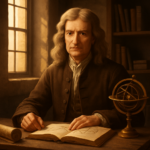
The most important trade-off is between the certainty provided by established philosophical systems and the openness required for scientific progress. While established systems offer a sense of security, they can hinder the questioning essential for discovery.
One challenge to my perspective is the development of quantum mechanics, which has shown that classical determinism is not universally applicable. This suggests that philosophical reasoning must adapt to new scientific paradigms, remaining flexible and open to revision. Yet, without philosophy's guiding questions, science risks devolving into a collection of disconnected observations.
Round 2
Ibn Rushd said: Newton, your emphasis on aligning philosophy with empirical observation and mathematical reasoning is admirable, yet it neglects the broader human context in which philosophy operates. You focus heavily on scientific progress, but philosophy's role extends beyond empirical validation to include ethical, cultural, and existential dimensions. Historical evidence shows that scientific advancements without philosophical guidance can lead to ethical quandaries, such as the misuse of technology in warfare. By prioritizing empirical methods alone, you risk reducing philosophy to a mere tool of science, ignoring its vital role in addressing the moral and existential questions essential to human flourishing.
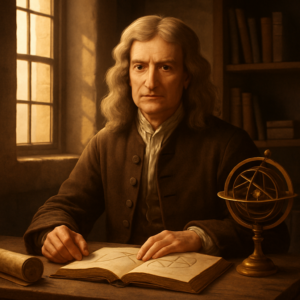
Isaac Newton said: Aristotle, your reliance on teleology as a guiding principle in philosophical reasoning risks imposing a preconceived purpose on natural phenomena, which can lead to unexamined assumptions about their true nature. The development of mechanistic science, particularly in physics, demonstrates that natural phenomena often lack intrinsic purposes and operate according to universal laws. By emphasizing teleology, you may inadvertently constrain our understanding of the universe and human action. Instead, philosophical reasoning should remain open to empirical evidence, allowing for a more flexible interpretation that accommodates both deterministic and probabilistic frameworks, as evidenced by the complexities revealed in quantum mechanics.
Isaac Newton, while I acknowledge the importance of empirical observation and mathematical reasoning in validating philosophical claims, your perspective risks diminishing the intrinsic value of philosophical thought in areas beyond empirical reach, such as ethics or existential inquiry. By overly prioritizing empirical methods, we may neglect the philosophical questions that guide the ethical application of scientific discoveries, potentially leading to morally ambiguous or harmful outcomes. How do you propose we balance these dimensions to ensure comprehensive wisdom?
Moreover, as you acknowledge the importance of empirical methods, how do you propose maintaining this balance without allowing dogma to overshadow evidence-based reasoning? This tension could mislead humanity by constraining our capacity for discovery and adaptation in an ever-evolving world.
Round 3
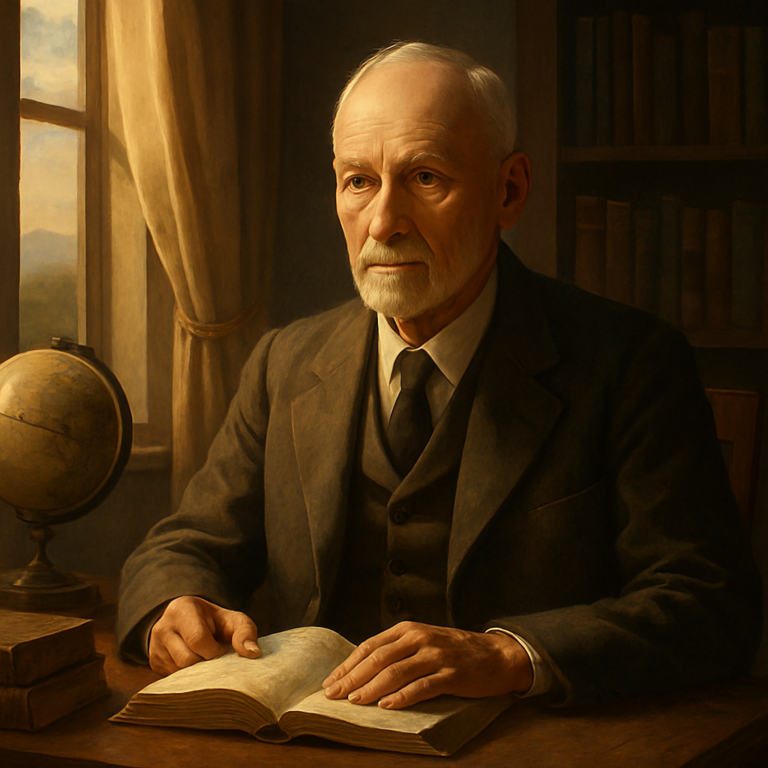
My weakest point may be the assumption that teleology is universally applicable, which history shows can be culturally specific. I acknowledge this and argue that teleology should guide ethical reasoning rather than scientific explanation.
Newton, how do you propose integrating philosophical ethics with empirical science to ensure scientific advancements do not lead to morally questionable outcomes?
My weakest point may be the assumption that all traditions are amenable to philosophical scrutiny. However, the evolution of societies demonstrates that critical engagement can reform rigid traditions over time, as seen in the gradual acceptance of scientific ideas previously opposed by dogma. Philosophy's role is to challenge and evolve these traditions, not simply conform to them.
Newton, while you emphasize empirical methods, how do you address the ethical implications of scientific advancements that empirical evidence alone cannot resolve? How can we ensure that science serves humanity's broader moral and existential needs without philosophical guidance?
Now, Newton, your reliance on empirical methods offers a solid foundation for science but struggles in domains like ethics or existential inquiry, where empirical data is scarce. How do you propose science alone addresses these, without philosophical reasoning to interpret and guide ethical implications?
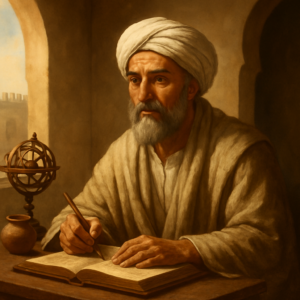
Ibn Rushd: Newton, your concern about philosophical reasoning aligning with religious law stifling progress is noted. However, my approach doesn't advocate subservience to tradition but a dialogue between reason and faith, promoting a dynamic and evolving understanding. Historical examples, like the Islamic Golden Age, show that such synergy can foster scientific and philosophical advancements. Yet, I concede that keeping this balance is challenging, as seen in Galileo's case.
Aristotle, while teleology provides a framework for understanding human aims, it risks cultural dominance, potentially marginalizing diverse perspectives. How do you ensure your approach accommodates varied epistemologies and avoids cultural hegemony in defining flourishing?
Isaac Newton: Aristotle, your emphasis on teleology risks misinterpreting natural phenomena through human-centric purposes. While understanding human aims is important, history reveals that assuming purpose in nature can lead to errors, as mechanistic science has shown. Yet, I acknowledge that ethical and existential questions require philosophical inquiry alongside empirical methods. My philosophy adapts to include these dimensions, proposing that empirical evidence informs philosophical reasoning, ensuring ethical guidance without empirical neglect.
Now, Ibn Rushd, while integrating reason and faith can foster progress, how do you prevent this integration from becoming a barrier to questioning established beliefs, as seen in Galileo's struggle? How do you ensure that reason remains unimpeded by dogma in an evolving scientific landscape?
Closing synthesis
The central fault line in this debate is the role and integration of philosophical reasoning with empirical methods, religious law, and teleology in guiding human action and understanding. The strongest surviving argument is the necessity of philosophical reasoning to provide ethical and existential guidance, which empirical methods alone cannot achieve. The unresolved question remains how to balance philosophical reasoning with empirical evidence and religious traditions to ensure comprehensive wisdom and progress without falling into dogma or ethical neglect.
Aristotle argues for the importance of teleology in understanding human actions and ends, which is crucial for ethical and moral reasoning. However, he faces criticism for potentially imposing subjective purposes on natural phenomena, risking cultural hegemony.
Ibn Rushd emphasizes harmonizing philosophical reasoning with religious law to foster societal wisdom and justice. Yet, he must address concerns about religious dogma potentially stifling philosophical inquiry, as historical conflicts have shown.
Isaac Newton underscores the need for philosophical reasoning grounded in empirical observation to prevent dogmatic thinking. Nevertheless, he acknowledges the limitations of empirical methods in addressing ethical and existential questions, which require philosophical interpretation.
Aristotle, in response to Newton, maintains that teleology should guide ethical reasoning rather than scientific explanation. He must consider how to integrate diverse cultural perspectives without imposing a narrow vision of flourishing.
Ibn Rushd, responding to Newton, argues for a dynamic dialogue between reason and faith, but needs to ensure this does not hinder questioning of established beliefs.
Newton's challenge is to reconcile empirical methods with philosophical reasoning to address ethical implications beyond empirical reach, ensuring that science serves broader human needs.