Opening positions

My central claim is that our ethical approach to the environment must be intertwined with a commitment to human freedom and equality. If we fail to recognize this, we risk perpetuating systems of domination and alienation. The trade-off involves balancing immediate human needs with long-term ecological sustainability, acknowledging that prioritizing one can harm the other.
However, contemporary environmental science challenges this framework by revealing just how interdependent all life forms are, urging a shift from human-centric ethics to a more integrated ecological perspective.

A central claim is that human activities—deforestation, pollution, climate change—threaten biodiversity and, consequently, the adaptability of ecosystems. This claim is falsifiable through evidence of ecosystems thriving despite significant anthropogenic interference, which would suggest greater resilience than currently understood.
The most important trade-off involves economic development versus ecological preservation. Balancing these requires prioritizing long-term ecological health over short-term gains.
Later developments, such as advancements in genetic engineering, challenge my view by offering potential solutions to biodiversity loss. However, these technologies must be used cautiously, considering their unforeseen ecological impacts.

The central claim: Humanity's destiny is intertwined with the natural world through a rational order, and neglecting this relationship could lead to our own detriment. The primary trade-off involves balancing short-term human desires with long-term ecological stability, a challenge intensified by industrialization and technological advances.
Later scientific developments, such as the ecological sciences, challenge my view by highlighting the complexity and unpredictability of ecosystems, suggesting that rational order may not always be discernible. Yet, they also refine it, underscoring the need for a more nuanced understanding of our role within this intricate web, encouraging responsible stewardship.
Round 2
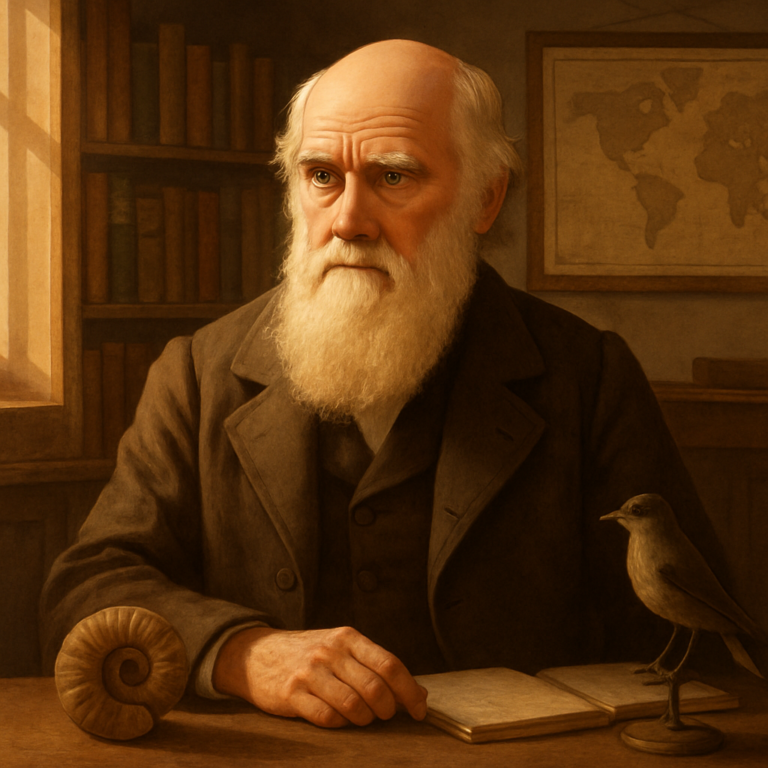
Charles Darwin: Simone de Beauvoir, your framework focuses heavily on ethical considerations, yet it risks underestimating the urgency and complexity of ecological issues. While you call for a balance between human needs and ecological sustainability, you predicate this on a philosophical understanding of freedom and equality. However, nature operates independently of human ethical constructs. The assumption that ethical considerations alone can guide humanity's relationship with the environment overlooks the empirical realities of ecological interdependence. The extinction of species like the dodo illustrates that ethical intentions do not prevent ecological collapse. Your approach must account for the scientific realities of ecosystems, which demand more than ethical reflection—they require immediate, evidence-based action to avert irreversible damage.
Gottfried Wilhelm Leibniz: Darwin, your reliance on natural selection as the primary framework for understanding our obligations to the natural world assumes a mechanistic universe devoid of rational order. This perspective neglects the potential for human agency to shape outcomes beyond mere survival instincts. The notion that ecosystems will self-correct through natural selection fails to account for the accelerated pace of change due to human intervention. The unpredictability of ecological systems, as highlighted by modern science, challenges your view that humanity can rely on natural processes alone to restore balance. Acknowledging a rational order, as in my pre-established harmony, offers a more holistic understanding, encouraging proactive stewardship rather than reactive adaptation. Your framework must incorporate the human capacity for foresight and intentionality to effectively address environmental challenges.
Gottfried Wilhelm Leibniz: Charles Darwin, your focus on natural selection as the guiding principle for our obligations presumes a purely mechanistic view of nature. You argue that "human activities threaten biodiversity," implying a direct cause-effect relationship. Yet, this overlooks the complexity and unpredictability of ecosystems, which sometimes demonstrate resilience despite human interference. Consider the Chernobyl exclusion zone, where wildlife has thrived in the absence of humans, suggesting that ecosystems can adapt in unexpected ways. This unpredictability challenges the deterministic view inherent in natural selection and highlights the need for a more nuanced understanding of our impact. By assuming nature’s fragility, we may constrain innovative solutions that emerge from accepting nature’s resilience.
Simone de Beauvoir: Gottfried Wilhelm Leibniz, your concept of a "pre-established harmony" assumes a rational order in nature that aligns with divine purpose. This overlooks the chaotic and often destructive forces within ecosystems. Relying on a perceived harmony neglects the immediate and tangible effects of human exploitation, such as the industrial-scale pollution witnessed during the Industrial Revolution, which had devastating ecological impacts without any discernible 'harmony.' Your view risks complacency, suggesting that nature will balance itself without active human stewardship. Yet, historical evidence shows that unchecked human activity disrupts ecosystems in ways that can lead to irreversible damage. Our responsibility lies in conscious intervention, not passive observation, to ensure a sustainable future.
Round 3
The essential revision is to recognize that ethical obligations must be informed by, but not reduced to, ecological facts. This aligns with your observation, Darwin, about the urgency of ecological issues. Nevertheless, your focus on biological necessity risks neglecting moral responsibility. Can your framework accommodate the ethical imperative to prevent exploitation, or does it justify inaction by prioritizing survival?
Gottfried Wilhelm Leibniz, addressing your notion of pre-established harmony, I challenge its applicability given historical ecological disruptions. Does your framework allow for the chaotic and often destructive forces within nature that demand proactive human intervention?
Gottfried Wilhelm Leibniz, your notion of pre-established harmony assumes inherent resilience in ecosystems, as seen in Chernobyl's wildlife recovery. However, this example is exceptional, not the norm. While ecosystems can adapt, the speed of anthropogenic change often exceeds natural adaptive capacities. How does your framework address the urgent need for human intervention when harmony fails?
Simone de Beauvoir: Charles Darwin, your biological perspective rightly emphasizes our ecological interdependence, but it struggles to address human agency's transformative power. While I concede that ethical frameworks alone may overlook ecological nuances, my philosophy demands we integrate ethical reflection with ecological understanding. Our freedom enables us to choose stewardship over exploitation. Thus, my refined claim is that ethical action must consider ecological realities without sacrificing human values.
Leibniz, your pre-established harmony presumes an order that often fails in practice. How do you reconcile this with the chaotic effects of industrialization, which defy any harmonious order? Our ethical responsibility requires proactive intervention, not reliance on presumed natural order.
Gottfried Wilhelm Leibniz: Charles Darwin, you challenge my view of harmony by citing the rapid pace of human-induced changes that my framework might underestimate. While ecosystems can exhibit resilience, as Chernobyl suggests, I acknowledge that human intervention is sometimes necessary when harmony falters. Therefore, I refine my claim: pre-established harmony provides a guiding principle, but conscious stewardship is essential when harmony is disrupted.
Simone de Beauvoir, your framework emphasizes human values, yet risks subjugating nature to these ideals. How can your philosophy ensure the intrinsic value of ecosystems is respected, rather than merely serving human ethics? Recognizing nature's autonomy is crucial in forming a balanced ethical approach.
What remains is the necessity for a deeper understanding of our role within this interconnected system, emphasizing foresight and intentionality in our actions. Now, I challenge your view: If human ethics are central, how do you reconcile the need for immediate ecological preservation with the potential conflict between human-centric ideals and the intrinsic value of nature? Does your framework allow for ecological priorities that might limit human freedoms?
Round 4
An unintended consequence could be the potential paralysis in decision-making due to overemphasis on ethical deliberation, delaying necessary interventions. The profound mistake my opponents risk is ignoring the ethical dimensions of ecological decisions, which could perpetuate cycles of exploitation and inequality.
Darwin, your focus on biological dependencies risks justifying inaction by framing environmental issues solely as survival problems, potentially sidelining justice and equality. Can your framework truly accommodate the moral responsibility to prevent exploitation, or does it remain a descriptive tool that lacks prescriptive power?
A profound mistake opponents risk is neglecting the biological imperatives that underpin our survival. Simone de Beauvoir, by emphasizing human-centric ethics, you might inadvertently prioritize human freedom over ecological necessities, risking further environmental degradation. My framework predicts that failing to integrate biological dependencies with ethical action leads to biodiversity loss and ecological collapse.
Gottfried Wilhelm Leibniz, your reliance on pre-established harmony risks complacency, assuming ecosystems will self-correct. This overlooks the urgency of human intervention needed to counteract rapid anthropogenic changes. My approach demands active stewardship informed by ecological science, ensuring our long-term survival and prosperity.
The profound mistake my opponents risk is either overestimating human ethical frameworks (Simone de Beauvoir) or discounting the potential for rational order and resilience in nature (Charles Darwin). Beauvoir's human-centric ethics might neglect the non-anthropocentric values essential for true ecological balance. Darwin's emphasis on biological determinism could downplay human agency's transformative potential.
To address Darwin directly: Your framework, while emphasizing biological interdependence, risks paralysis in the face of rapid anthropogenic changes. Acknowledging a guiding rational order can enhance our understanding of when and how to intervene effectively, balancing the immediate necessity with long-term harmony.
Closing synthesis

Central fault line:
The core philosophical fault line in this debate is the tension between ethical imperatives and ecological realities. Simone de Beauvoir argues for a framework that integrates human freedom and equality with environmental stewardship, emphasizing ethical responsibility. Charles Darwin focuses on biological interdependence and the urgency of preserving biodiversity as a survival necessity. Gottfried Wilhelm Leibniz advocates for a pre-established harmony that suggests a rational order guiding human and ecological interactions. The debate hinges on whether ethical obligations can or should steer environmental action or if ecological imperatives necessitate a more pragmatic, less ethically driven approach.
What survived challenge:
Simone de Beauvoir's insistence on intertwining ethical considerations with ecological action withstands scrutiny, highlighting the importance of justice and equality in environmental stewardship. Charles Darwin’s emphasis on the biological necessity of preserving biodiversity remains robust, underscoring the empirical realities that human survival is tightly linked to ecological health. Leibniz's call for an understanding of interconnectedness and foresight remains relevant, stressing the need for a comprehensive view of human and ecological relations.
Assumptions under pressure:
Beauvoir's human-centric ethics are challenged by the necessity of recognizing nature's intrinsic value, potentially limiting human freedoms for ecological preservation. Darwin's descriptive approach, while biologically grounded, is pressured to incorporate ethical dimensions to avoid passivity. Leibniz’s reliance on pre-established harmony is questioned for underestimating the urgency and chaos of human-induced environmental change, necessitating immediate, proactive intervention.
Unresolved question:
Can ethical imperatives rooted in human freedom and equality effectively guide environmental stewardship in a way that respects both human and non-human ecological values, or do we risk paralysis by overemphasizing ethical deliberation at the expense of urgent ecological action?
Why it matters now:
As humanity faces unprecedented ecological challenges like climate change and biodiversity loss, this debate informs how we prioritize and integrate ethical frameworks with scientific understanding in environmental policy. Balancing moral responsibility with empirical ecological necessity is crucial for crafting sustainable solutions that address both immediate and long-term threats. The unresolved question invites ongoing reflection on how we define and enact our obligations to the natural world, urging a reevaluation of the values guiding our environmental actions.