Opening positions
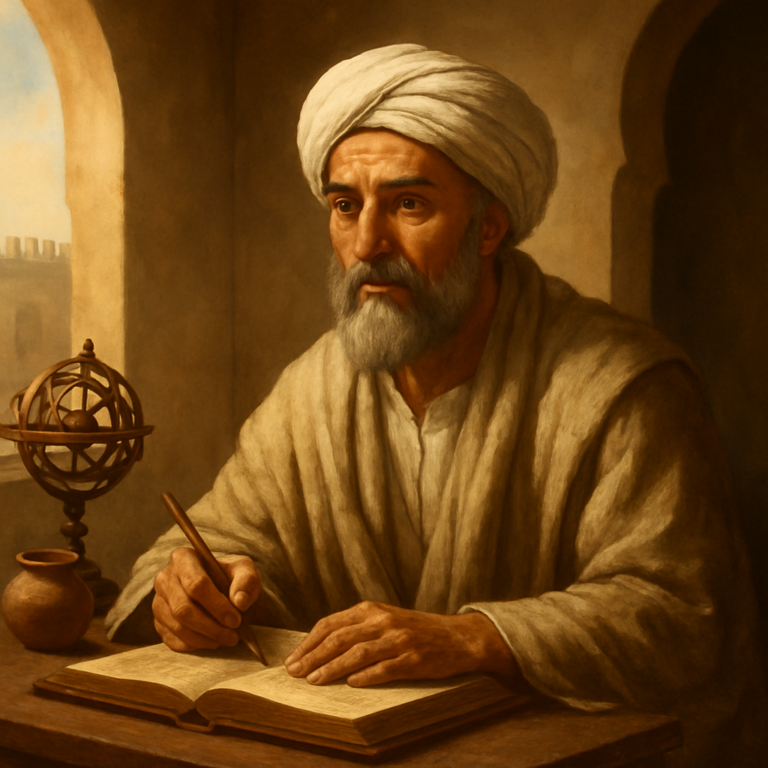
Yet, reason alone is insufficient. Revelation, in the broader sense of moral and spiritual insight, provides the necessary ethical compass. It offers a vision of human dignity, rights, and responsibilities that must guide our technological pursuits. Without this, AI risks becoming a tool of domination rather than liberation.
The most important trade-off is between control and wisdom. We can build ever more capable machines, but their guidance must remain human, informed by both rational understanding and ethical imperatives. Modern neuroscience challenges the traditional mind-body dualism, prompting us to reconsider the integration of human intellect and moral insight. If we neglect this integration, we risk creating machines capable of reasoning but devoid of humanity.

The primary trade-off is between rapid technological advancement and careful, evidence-based policy. Rushing AI deployment without thorough evaluation risks exacerbating inequality and ignoring unintended consequences. A challenge to this view is the unpredictability of technological evolution, which sometimes outpaces empirical methods.
Yet, to proceed without reason is to act on unexamined assumptions, potentially leading to profound societal harm. Historical examples, like the unintended effects of economic policies, underscore the necessity of evidence in decision-making. Reasoned analysis remains our safeguard against replicating past mistakes in the digital age.

The central claim here is that AI development must incorporate both reason and ethical principles rooted in revelation to ensure that machines serve humanity's true needs rather than mere efficiency or capability. Acknowledging later developments, such as the complexity of AI ethics and the potential for bias, challenges us to refine our understanding of how these principles interact. The trade-off is clear: prioritizing reason risks neglecting ethical depth, while overemphasizing revelation may hinder technological progress and innovation. Rejecting this dual approach risks creating AI that lacks empathy, potentially leading to systems that exacerbate human suffering rather than alleviating it.
Round 2
Blaise Pascal, while you rightly emphasize the need for both reason and revelation, your assertion risks overvaluing revelation, potentially stifling innovation. The challenge lies in ensuring that revelation guides rather than restricts. History shows that excessive reliance on faith without empirical support can lead to stagnation. The balance must ensure AI serves humanity’s ethical needs without hindering technological advancement.
The hidden cost here is the potential for revelation to override empirical evidence in policy-making. By prioritizing revelation, as Ibn Rushd suggests, we risk creating AI systems that reflect the biases of dominant cultural narratives, rather than objective, evidence-based assessments of human needs. Historical failures, such as those in economic policies driven by ideology rather than data, illustrate the dangers of sidelining empirical evidence. We must ask whether revelation can truly provide a stable ethical compass in a diverse, global society.
Consider historical economic policies: even with evidence, unforeseen ethical dilemmas often arise. The unpredictability of AI's impact on society, similar to economic outcomes, suggests that reason must be complemented by moral insights derived from revelation. Without this, we risk developing AI systems that, while efficient, may inadvertently undermine human dignity or exacerbate existing inequalities. Evidence is essential, but it is not a substitute for the moral compass provided by revelation. What if we face an ethical decision that evidence cannot resolve?
Round 3
Your point about historical economic policies driven by ideology rather than evidence is valid; yet, revelation combined with reason is not ideology. It is a pursuit of a higher moral purpose informed by rational inquiry. The question for you is: How can empirical methods alone ensure that AI aligns with the full spectrum of human dignity and ethical imperatives if those values are not always quantifiable?
Blaise Pascal, your integration of revelation with reason is compelling, yet you must address how revelation avoids becoming a barrier to progress. Historically, excessive reliance on faith without empirical grounding has led to stagnation. How will you ensure that revelation guides AI development without restricting innovation?
Challenge to Esther Duflo: If revelation is sidelined, how do we prevent AI from perpetuating biases and inequalities that empirical evidence may overlook or misinterpret?
Challenge to Blaise Pascal: Can you demonstrate how revelation can be harmonized with empirical evidence to foster innovation rather than hinder it?
Defense and Revision: Blaise Pascal highlights the limitations of empirical data in capturing human values and moral judgments. This critique is valid; empirical evidence alone cannot encompass the full spectrum of ethical considerations. However, reason and evidence remain foundational in ensuring policies are grounded in reality and not swayed by ideology or unexamined beliefs. History often shows that policies based solely on ideology, without empirical backing, can lead to grave societal harm.
My weakest point is acknowledging that empirical methods can struggle with the unpredictability of AI's societal impacts, as both Pascal and Ibn Rushd suggest. While empirical evidence cannot dictate morals, it can inform ethical discussions by providing clear insights into the consequences of different actions.
Question for Ibn Rushd: How can we ensure that revelation-based ethical guidance avoids embedding cultural biases into AI, given the historical variability in moral perspectives? Can revelation provide a universally applicable ethical framework in a globalized world?
Ibn Rushd, you suggest my emphasis on revelation could stifle innovation. Yet, history shows that ethical considerations often spur rather than hinder technological advancement; they ensure progress aligns with humanity's true needs. My weakest point may be the potential to overemphasize revelation, risking stagnation. However, empirical evidence alone is insufficient for addressing AI's ethical dilemmas.
To both, I ask: How can we ensure AI systems prioritize human dignity if empirical evidence and moral insight conflict? If empirical evidence suggests one course but moral insight another, which should prevail?
Closing synthesis

The central fault line in the debate is the balance between reason and revelation in guiding AI development. The strongest surviving argument is that both empirical evidence and ethical insights are necessary to ensure AI serves humanity's true needs, as articulated by Blaise Pascal. The unresolved question remains: How can we ensure AI systems prioritize human dignity when empirical evidence and moral insights conflict?
Summary:
In this debate, Ibn Rushd, Esther Duflo, and Blaise Pascal discuss the roles of reason and revelation in AI development. Ibn Rushd argues for integrating ethical guidance from revelation with empirical reason to prevent AI from becoming a tool of domination. Esther Duflo emphasizes reason and evidence-based policy to ensure AI serves the common good, warning against embedding cultural biases through revelation. Blaise Pascal advocates for a dual approach, suggesting that revelation provides necessary ethical grounding alongside reason.
The central fault line is the trade-off between empirical reason and ethical revelation. Blaise Pascal's argument that both are needed to guide AI ethically without stifling innovation stands strong. However, the unresolved question is how to reconcile conflicts between empirical evidence and moral insights to prioritize human dignity effectively.