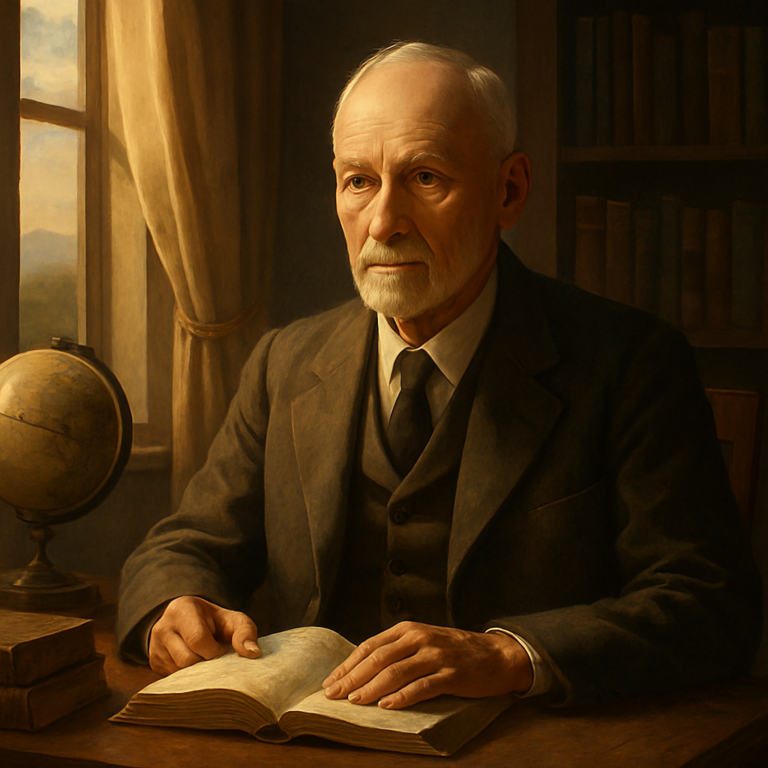
The Moral Imperative of Compassion: A Tolstoyan Inquiry
The Moral Imperative of Compassion: A Tolstoyan Inquiry
In the midst of the cacophony of modern life, we often find ourselves wrestling with the question of what it means to lead a good life. This inquiry leads us inevitably to the role of compassion—a virtue that, while extolled across cultures and epochs, remains elusive in practice. As we embark on this exploration, we may find guidance in the thoughts of Leo Tolstoy, whose literary and philosophical contributions continue to resonate, urging us to examine the moral fabric of our existence.
Understanding Compassion
Compassion, at its core, can be defined as a deep awareness of the suffering of others coupled with the desire to alleviate that suffering. This simple definition belies the complexity of the emotion and its implications for human interaction. Tolstoy, in his writings, often emphasized that true compassion transcends mere sympathy; it demands action. To feel for another is not enough; one must also act to relieve their suffering. This imperative raises several questions: What motivates us to act? What barriers do we face in responding to the suffering of others? And how does our understanding of compassion shape our interactions within society?
Historical Context and the Search for Meaning
To appreciate Tolstoy’s perspective on compassion, it is essential to consider the historical context in which he wrote. Born into the Russian aristocracy in the early 19th century, Tolstoy witnessed the stark inequalities of his society—the opulence of the upper classes juxtaposed with the dire poverty of the peasantry. This disparity steered him toward a profound moral and spiritual awakening. In works such as “War and Peace” and “Anna Karenina,” he illustrates the interconnectedness of human lives, stressing that individual actions ripple through the broader social fabric.
In the context of his time, Tolstoy’s emphasis on compassion represented a radical departure from the prevailing norms of societal indifference and materialism. He challenged the established order, advocating for a life rooted in ethical living and communal responsibility. His ideas resonate with the teachings of various religious traditions, notably Christianity, where compassion is considered a divine attribute. Yet, this raises further questions: How can one reconcile the call for compassion with the harsh realities of societal structures? Is it possible to cultivate compassion in a world often driven by self-interest?
The Ethical Dimension of Compassion
At the heart of Tolstoy’s philosophy lies an ethical framework that demands self-reflection and accountability. He posits that the moral imperative to act compassionately is not contingent upon the recipient’s circumstances; rather, it is an obligation inherent in our shared humanity. In his essay “The Kingdom of God Is Within You,” Tolstoy articulates a vision of a world wherein compassion forms the bedrock of human interactions. He argues that to live ethically is to live in accordance with the principle of love—love for one’s neighbor, regardless of their status or situation.
This perspective can be juxtaposed with utilitarianism, a philosophical framework that seeks to maximize overall happiness. While both approaches advocate for the alleviation of suffering, they diverge in their treatment of individual worth. Utilitarianism tends to prioritize the greater good over individual needs, potentially justifying actions that may harm some for the benefit of many. Tolstoy’s approach, however, emphasizes the intrinsic value of each individual, asserting that true compassion must account for the unique plight of every person.
Barriers to Compassionate Action
Despite the clear moral imperative for compassion, various barriers inhibit our ability to act. Tolstoy recognized that societal conditioning often breeds apathy. The distance created by class, race, or nationality can desensitize us to the suffering of others. This disconnection is further exacerbated by a culture that glorifies individualism and success, which can lead to a neglect of communal ties. In his later life, Tolstoy sought to dismantle these barriers, advocating for a simplicity that fosters genuine connections among individuals.
Moreover, the psychological phenomenon known as “compassion fatigue” poses a significant challenge. As we encounter the overwhelming suffering present in the world—through news reports, social media, or direct encounters—our ability to respond compassionately can be dulled. In this context, it is essential to reflect on how we can cultivate resilience against such fatigue. How do we balance the need for self-care with the moral call to engage deeply with the suffering of others?
The Role of Literature and Art in Cultivating Compassion
Literature, as exemplified by Tolstoy’s own work, serves as a powerful vehicle for fostering compassion. Through storytelling, we are invited into the lives of others, experiencing their joys and sorrows. This narrative immersion cultivates empathy, bridging the gap between the self and the other. Tolstoy’s characters, often grappling with moral dilemmas, compel readers to confront their values and actions. In this way, literature acts as a mirror, reflecting our own capacity for compassion and challenging us to act.
However, we must also consider the potential limitations of literature. Can stories alone incite meaningful action, or must they be accompanied by a broader societal shift toward compassion? The question invites us to reflect on the interplay between individual change and collective responsibility. How can we harness the power of storytelling to inspire not only empathy but also tangible action in our communities?
Practical Implications for Modern Society
In contemporary society, where division and disconnection often dominate, Tolstoy’s call for compassion is more relevant than ever. We are faced with global challenges—climate change, social injustice, and political polarization—that demand a collective response grounded in empathy. The ethical implications of Tolstoy’s philosophy compel us to reconsider our actions at both individual and systemic levels.
Practically, this journey toward a more compassionate society begins with small, intentional acts. Engaging with our communities through volunteerism, advocating for social justice, or simply listening to the stories of others can cultivate a culture of compassion. Moreover, fostering dialogues about the significance of compassion within educational institutions can prepare future generations to prioritize empathy as a guiding ethical principle.
Conclusion: A Path Forward
As we reflect on the moral imperative of compassion through the lens of Tolstoy’s philosophy, we are confronted with challenging but vital questions. How do we navigate the complexities of human suffering? What does it mean to act ethically in a world fraught with inequality and apathy? Ultimately, the answers lie not in abstract philosophical musings but in our willingness to engage with the lived experiences of those around us. By embracing Tolstoy’s vision of compassion, we begin to unravel the barriers that divide us and foster a more just and humane world.
In an age where the capacity for empathy can sometimes feel like a flickering flame, Tolstoy’s enduring legacy serves as a reminder that compassion is not merely a feeling; it is a choice, a practice, and, above all, a profound responsibility we share as members of the human family.