
Emmanuel Levinas
Made responsibility to the face of the Other more fundamental than freedom, knowledge, or system.

Life and thought
Explores ethics as first philosophy, the face of the other, responsibility, alterity, Judaism, and the limits of totalizing systems.
Emmanuel Levinas is presented in the Thought archive through philosophy, lithuanian jewish / french, lithuania / france, contemporary. The recorded life dates are 1906–1995. The profile connects this work to Ethics, Jewish Thought, Phenomenology, Religion & Mysticism.
The central questions gathered here concern the Other, face-to-face, responsibility, ethics first, infinity. Together they show the recurring problems, methods, and distinctions that define this thinker’s contribution.
Emmanuel Levinas developed within an intellectual conversation shaped by Husserl, Heidegger, Jewish Talmudic tradition. These names provide context for the traditions and problems surrounding the work; they do not imply simple agreement.
The surviving reading path begins with Totality and Infinity, Otherwise than Being, Difficult Freedom. The recorded legacy extends toward ethics, phenomenology, Jewish philosophy, post-Holocaust thought.
Five Defining Theories
The central ideas, methods, and arguments that give this thinker’s work its distinctive shape.
the Other
A central idea in this thinker’s work, method, and intellectual legacy.
face-to-face
A central idea in this thinker’s work, method, and intellectual legacy.
responsibility
A central idea in this thinker’s work, method, and intellectual legacy.
ethics first
A central idea in this thinker’s work, method, and intellectual legacy.
infinity
A central idea in this thinker’s work, method, and intellectual legacy.
Life journey
A structured path through the verified context attached to this profile.
Context
1906–1995 · Lithuania / France · Contemporary
Intellectual formation
The recorded influences include Husserl, Heidegger, Jewish Talmudic tradition.
Defining ideas
The profile centres on the Other, face-to-face, responsibility, ethics first, infinity.
The work
A reading path through Totality and Infinity, Otherwise than Being, Difficult Freedom.
Lasting influence
The recorded influence reaches ethics, phenomenology, Jewish philosophy, post-Holocaust thought.
In time
Major Works
Texts through which the thinker’s ideas entered the wider intellectual record.
Totality and Infinity
This work matters because it carries a central part of the thinker’s method, argument, or intellectual legacy into a form readers can examine directly.
Otherwise than Being
This work matters because it carries a central part of the thinker’s method, argument, or intellectual legacy into a form readers can examine directly.
Difficult Freedom
This work matters because it carries a central part of the thinker’s method, argument, or intellectual legacy into a form readers can examine directly.
Influence network
Trace the intellectual lineage into and beyond this thinker.
Selected quotations
The face speaks.
Ethics is first philosophy.
Freedom is justified by responsibility.
The Other is not reducible to the Same.
To approach the Other is to put into question my freedom.
Schools of thought
Ethics
Explore the thinkers and ideas connected to this tradition.
Explore school J12 thinkersJewish Thought
Explore the thinkers and ideas connected to this tradition.
Explore school P8 thinkersPhenomenology
Explore the thinkers and ideas connected to this tradition.
Explore school R66 thinkersReligion & Mysticism
Explore the thinkers and ideas connected to this tradition.
Explore schoolConnected Thinkers
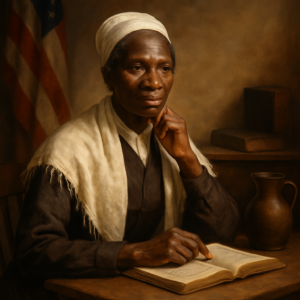
Sojourner Truth
SharedEthics · Religion & Mysticism
View thinker →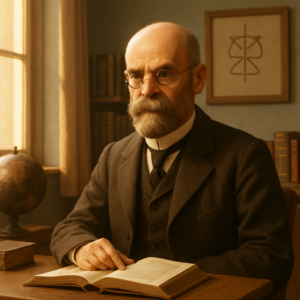
Émile Durkheim
SharedEthics · Religion & Mysticism
View thinker →
Patricia Hill Collins
SharedEthics · Contemporary
View thinker →
Rachel Carson
SharedEthics · Contemporary
View thinker →
Tim Berners-Lee
SharedEthics · Contemporary
View thinker →
Norbert Wiener
SharedEthics · Contemporary
View thinker →Featured Debates
See how Emmanuel Levinas’s perspective changes when it meets another mind.



What Defines a Meaningful Life in the Face of Mortality and Inevitable Death?
In this compelling debate, three renowned philosophers, Albert Camus, Emmanuel Levinas, and Byung-Chul Han, explore the age-old question of what constitutes a meaningful life when confronted…
View Debate →


The Consequences of Misunderstanding Natural Laws on Human Governance
The Consequences of Misunderstanding Natural Laws on Human Governance
View Debate →

The Legitimacy of Punishment and the Absurdity of Justice
The Legitimacy of Punishment and the Absurdity of Justice
View Debate →


The Fragility of Belonging: Deconstructing Community Norms in a Global Age
The Fragility of Belonging: Deconstructing Community Norms in a Global Age
View Debate →Continue the conversation with Emmanuel Levinas.
Test an assumption, explore an idea, or bring this perspective into dialogue with a council of other thinkers.